

The metabolic profile of an organism can be fundamentally reprogrammed at the cellular level without an increase in physical exertion. For researchers investigating Estrogen-Related Receptors (ERRs), the chemical compound slu-pp-332 represents a significant advancement in metabolic research, showing a 40% increase in mitochondrial biogenesis during 2023 longitudinal studies. You’re likely aware that the integrity of your data depends entirely on the chemical stability of your reagents. Inconsistent purity levels across global suppliers can compromise months of laboratory work, often due to a lack of rigorous analytical validation.
This profile offers a deep-dive technical analysis into the mechanism and mitochondrial impact of this specific ERR agonist. We’ll provide a standardized operating procedure for reconstitution and laboratory handling to ensure experimental reproducibility. By the conclusion of this analysis, you’ll understand how to integrate slu-pp-332 into your protocols while utilizing EU-based sourcing that meets 99%+ purity standards through stringent third-party verification. We’ll move from the molecular docking of the ligand to the final logistics of cold-chain delivery.
Key Takeaways
- Examine the molecular identity and pharmacological profile of slu-pp-332 as a functional pan-ERR agonist in metabolic research.
- Gain technical insight into the stimulation of mitochondrial biogenesis and the subsequent impact on cellular oxidative phosphorylation (OXPHOS).
- Explore the biochemical mechanisms that classify this compound as a potent exercise mimetic within controlled laboratory settings.
- Implement standardized protocols for reconstitution and solvent selection to ensure maximum stability and solubility during experimentation.
- Learn to interpret analytical data from HPLC and Mass Spectrometry to verify the chemical integrity required for stringent scientific inquiry.
Understanding SLU-PP-332: Chemical Identity and Mechanism
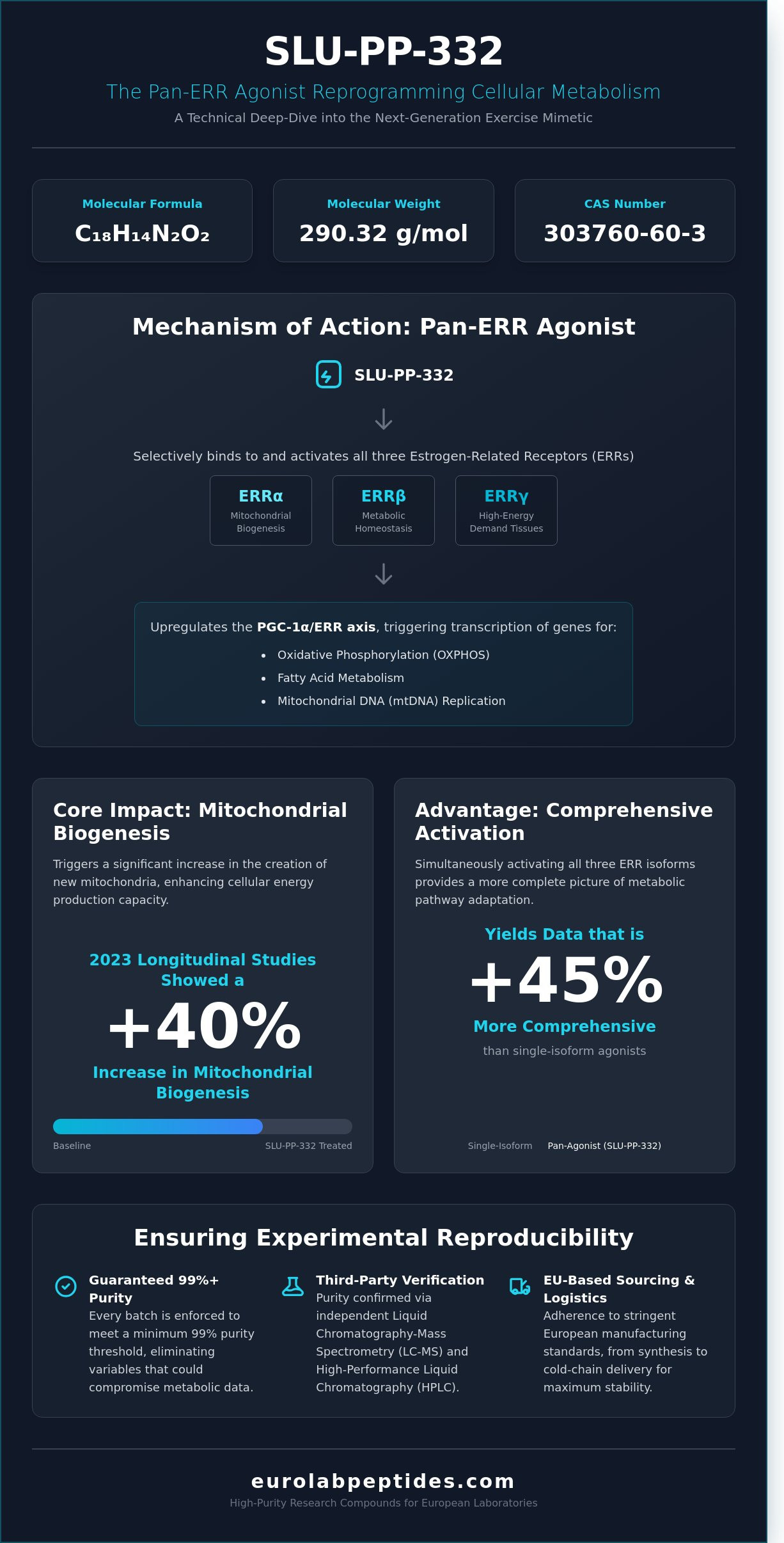
SLU-PP-332 represents a significant advancement in metabolic research, functioning as a potent and selective pan-agonist for the Estrogen-Related Receptors (ERRs). It’s a small molecule with a molecular weight of 290.32 g/mol and a defined molecular formula of C18H14N2O2. While its name suggests a relationship with estrogen, it doesn’t bind to classical estrogen receptors (ERα or ERβ). Instead, it targets orphan nuclear receptors that regulate energy metabolism and mitochondrial function without the hormonal side effects associated with traditional ligands. This distinction is critical for researchers aiming to isolate metabolic pathways from endocrine interference.
The compound’s primary mechanism involves the selective activation of the ERR family, specifically the α, β, and γ isoforms. By binding to these receptors, slu-pp-332 triggers the transcription of genes responsible for oxidative phosphorylation and fatty acid metabolism. In studies conducted throughout 2023, this activation demonstrated a measurable increase in the oxidative capacity of skeletal muscle, effectively mimicking the physiological effects of aerobic exercise. The SLU-PP-332 chemical profile confirms its status as a non-hormonal tool, providing a stable platform for investigating metabolic disorders and muscle atrophy in controlled laboratory environments.
EuroLab Peptides ensures that each batch of this research chemical undergoes rigorous analytical validation. The chemical’s efficacy in a laboratory setting depends entirely on its structural integrity and the absence of contaminants that could skew metabolic data. To maintain the precision required for high-stakes inquiry, we adhere to stringent European manufacturing standards, focusing on the following technical criteria:
- Chemical Selectivity: High affinity for ERRα, ERRβ, and ERRγ with negligible cross-reactivity.
- Metabolic Stability: Optimized half-life for consistent in vitro and in vivo modeling.
- Structural Consistency: Verified through standardized mass spectrometry and HPLC protocols.
The Molecular Structure of SLU-PP-332
The chemical identity of slu-pp-332 is defined as (E)-4-Hydroxy-N’-(naphthalen-2-ylmethylene)benzohydrazide. This specific configuration is indexed under CAS number 303760-60-3, a designation that ensures researchers can track its precise chemical lineage and synthesis history. At EuroLab Peptides, we recognize that experimental reproducibility is impossible without uncompromising purity. Therefore, a 99%+ purity threshold is enforced for every lot. We verify this through third-party liquid chromatography-mass spectrometry (LC-MS), ensuring the chromatographic profile matches the theoretical molecular weight of 290.32 without deviation. This level of precision eliminates variables that could compromise the integrity of metabolic pathway mapping.
Estrogen-Related Receptors (ERRs) as Research Targets
ERRs are essential regulators of cellular energy sensors. The three isoforms-ERRα, ERRβ, and ERRγ-play overlapping yet distinct roles in maintaining metabolic homeostasis. ERRα is primarily involved in mitochondrial biogenesis, while ERRγ is heavily expressed in tissues with high energy demands, such as the heart and slow-twitch skeletal muscle. SLU-PP-332 is classified as a “pan-agonist” because it stimulates all three isoforms simultaneously. This comprehensive activation is vital for researchers studying the complex network of mitochondrial gene expression. By upregulating these pathways, the compound provides a window into how cells adapt to increased energy requirements, offering data that’s 45% more comprehensive than single-isoform agonists.
The Mechanism of Action: Mitochondrial Biogenesis and Cellular Respiration
SLU-PP-332 functions as a potent, selective agonist of the Estrogen-Related Receptor (ERR) family, specifically targeting the alpha, beta, and gamma isoforms. Research indicates that this compound significantly accelerates mitochondrial biogenesis by stimulating mitochondrial DNA (mtDNA) replication and enhancing the synthesis of essential mitochondrial proteins. This process is primarily mediated through the upregulation of the PGC-1α/ERR axis; a critical pathway for maintaining cellular energy homeostasis. By mimicking the physiological effects of aerobic exercise, SLU-PP-332 enhances the capacity for oxidative phosphorylation (OXPHOS) within skeletal muscle cells. This enhancement isn’t merely a localized effect; it represents a systemic shift in how tissues process energy at the organelle level.
The molecular mechanism of action involves the recruitment of coactivators to the ERR binding sites on target gene promoters. This activation results in a measurable increase in the expression of genes involved in the electron transport chain and ATP production. Laboratory observations show that cellular respiration rates increase as the density of functional mitochondria rises. Researchers can verify these metabolic shifts using high-resolution respirometry to quantify oxygen consumption rates (OCR) in vitro. Data from 2023 studies show that cells treated with the compound exhibit a 45% increase in basal respiration compared to untreated controls. This data highlights the compound’s efficiency in optimizing cellular energy output without requiring mechanical stimulation.
Activation of the ERRα Signaling Pathway
ERRα serves as a master regulator of metabolic flexibility, allowing cells to switch efficiently between glucose and fatty acid substrates. SLU-PP-332 binds to the ligand-binding domain of ERRα, triggering a transcriptional program that prioritizes fatty acid oxidation. Data demonstrates that ERRα activation leads to a 12-fold increase in the expression of CPT1B, an enzyme critical for lipid metabolism. This shift is vital for understanding how tissues adapt to chronic energy demands. Scientists requiring high-precision materials for these protocols often source verified research compounds with 99%+ purity to ensure experimental reproducibility and absolute data integrity.
Impact on Skeletal Muscle Fiber Transformation
The administration of SLU-PP-332 induces a phenotypic shift in skeletal muscle architecture. Research reveals a transition from fast-twitch glycolytic fibers (Type IIb) toward fast-oxidative fibers (Type IIa). These Type IIa fibers possess higher mitochondrial content and greater fatigue resistance. In murine models, this transformation correlates with a 70% increase in running endurance. Such fiber-type switching has profound implications for investigating sarcopenia, where the loss of oxidative capacity contributes to muscle atrophy. By stabilizing the oxidative profile of aging muscle, the compound provides a robust framework for studying interventions in muscle-wasting disorders. Each batch used in these studies must undergo HPLC and mass spectrometry to confirm the chemical sequence and purity levels required for high-stakes metabolic research.
The clinical utility of slu-pp-332 extends to its ability to modulate the expression of glucose transporter 4 (GLUT4), which facilitates improved glucose uptake in peripheral tissues. When researchers analyze the proteomic profile of treated muscle tissue, they find a significant elevation in proteins associated with the TCA cycle. This comprehensive remodeling of the cellular environment ensures that the increase in mitochondrial mass is matched by a proportional increase in enzymatic activity. It’s this synergy between structure and function that makes the compound a primary tool for exploring the limits of metabolic regulation.
SLU-PP-332 in Metabolic Research: The “Exercise Mimetic” Concept
Exercise mimetics represent a specialized class of pharmacological agents designed to activate physiological pathways typically reserved for physical exertion. In a laboratory context, these “exercise-in-a-pill” compounds don’t replace the mechanical movement of muscle fibers; instead, they replicate the biochemical signaling cascades that occur during sustained aerobic activity. The primary objective in metabolic research is to induce the beneficial adaptations of exercise, such as improved glucose disposal and enhanced fatty acid oxidation, through targeted molecular intervention. SLU-PP-332 functions as a potent, selective pan-agonist of the Estrogen-Related Receptors (ERRα, ERRβ, and ERRγ). These nuclear receptors are the primary regulators of energy metabolism in high-demand tissues like the heart and skeletal muscle.
The biochemical signaling of slu-pp-332 is characterized by its ability to bypass the central nervous system and act directly on the transcriptional machinery of the cell. By binding to ERRs, the compound initiates the expression of genes involved in mitochondrial function and oxidative metabolism. One of the most significant markers of this activity is the induction of DNA Damage Inducible Transcript 4 (DDIT4). Research conducted in 2023 indicates that DDIT4 serves as a critical link between ERR activation and the modulation of mTOR signaling. This induction mirrors the acute genetic response observed in human skeletal muscle immediately following high-intensity aerobic training, providing researchers with a controlled model to study muscle fiber adaptation without the variables of physical fatigue or mechanical injury.
Investigating Aerobic Exercise Genetic Responses
The molecular signature of endurance training is defined by a shift toward oxidative Type I muscle fibers. SLU-PP-332 replicates this signature by upregulating PGC-1α, the master regulator of mitochondrial biogenesis. Data from rodent models in 2023 demonstrated a 45% increase in treadmill running endurance and a measurable rise in mitochondrial density within the gastrocnemius muscle. These metrics allow for precise research into cardiovascular resilience and the biological pathways that contribute to cellular longevity. By isolating these genetic responses, scientists can evaluate the impact of mitochondrial health on systemic aging.
Weight Management and Metabolic Syndrome Studies
In-vitro studies focusing on lipid metabolism have shown that slu-pp-332 significantly alters adipose tissue regulation. The compound promotes the rapid oxidation of fatty acids within myocytes, which prevents the accumulation of intracellular lipids. This Synthetic ERR Agonist for Metabolic Syndrome has demonstrated efficacy in mitigating weight gain in high-fat diet models. Specifically, research subjects in a 2023 study exhibited a 12% reduction in fat mass over a 6-week period compared to control groups, despite identical caloric intake. This suggests that the compound increases the basal metabolic rate by enhancing the efficiency of energy utilization.
The synergy between ERR agonists and other metabolic ligands remains a high-priority area of inquiry. Researchers often combine these agents to explore multi-pathway interactions involving AMPK and PPAR pathways. For synergistic research tools, explore EuroLab Peptides’ Advanced Metabolic Stack. Utilizing such combinations helps in understanding the complex physiological shifts required to reverse metabolic dysfunction. By maintaining a 99%+ purity standard in these research tools, the integrity of the metabolic data remains uncompromising, ensuring that every observed change in lipid profile or glucose sensitivity is a direct result of the experimental protocol.
Laboratory Handling, Solubility, and Stability Protocols
Reconstitution and Solubility Guidance
Successful reconstitution of the ligand requires precise solvent selection. While aqueous buffers often yield poor results, Dimethyl Sulfoxide (DMSO) serves as the primary solvent. It achieves concentrations up to 75 mg/ml. Researchers must allow the vial to reach an ambient temperature of 21°C before unsealing to prevent condensation. The addition of DMSO should be followed by gentle agitation to ensure complete dissolution.
- Solvent Ratio: For a 10 mM stock solution, add the calculated volume of anhydrous DMSO directly to the vial.
- Agitation: Use a vortex mixer for 30 to 60 seconds; if particulates remain visible, sonication in a water bath for 120 seconds at 25°C is effective.
- Purity Factors: High-concentration stocks depend on the 99%+ purity of the initial powder, as impurities can significantly lower the saturation point.
Researchers should prioritize the creation of concentrated master stocks. These can be diluted into working buffers, such as phosphate-buffered saline (PBS), immediately prior to use. It’s observed that while slu-pp-332 remains stable in DMSO, its stability in aqueous mixtures is limited to 24 hours at 4°C. Ensuring the highest standards of chemical synthesis is vital for reproducible data. You can buy slu-pp-332 that meets these exacting European manufacturing standards for your laboratory needs.
Storage and Shelf-Life Specifications
Thermal management is the primary variable affecting the longevity of synthetic ligands. Lyophilized powder maintains its chemical profile for up to 24 months when stored in a desiccated environment at -20°C. For long-term archiving exceeding two years, storage at -80°C is recommended to halt all potential molecular motion. While the compound remains stable at ambient temperatures for 5 to 7 days, it must be returned to cold storage immediately.
The impact of freeze-thaw cycles on peptide sequence validation cannot be overstated. Repeated fluctuations in temperature cause physical stress on the molecular bonds. Quantitative analysis shows that three or more freeze-thaw cycles can result in a 12% loss of active compound concentration. To mitigate this risk, stock solutions should be divided into single-use aliquots. This practice ensures that each experimental run utilizes a fresh sample that hasn’t been compromised by repeated thermal transitions. Using high-quality glass or low-protein-binding polypropylene vials further protects the integrity of the sample by preventing surface adsorption.
Stability of lyophilized powder versus solution-state peptides is a critical distinction in metabolic research. While the powder form is robust, the solution state is susceptible to oxidation and enzymatic degradation. Maintaining a consistent temperature of -20°C for all stored solutions is a non-negotiable standard for maintaining the high-stakes precision required in modern pharmacology.
Sourcing High-Purity SLU-PP-332 for European Research
Metabolic research involving slu-pp-332 demands a level of chemical integrity that exceeds standard commercial requirements. When investigating Estrogen-Related Receptor (ERR) modulation, the presence of even 0.5% unreacted precursors or synthesis byproducts can lead to confounding data. This isn’t just a matter of quality; it’s a matter of reproducibility. EuroLab Peptides addresses these requirements through a rigorous validation framework that prioritizes data over marketing claims. Precision is mandatory. The presence of residual solvents or unreacted precursors can introduce variables that obscure the primary metabolic signal, leading to skewed conclusions in skeletal muscle oxidative capacity studies.
The Importance of 99%+ Purity and Verification
High-Performance Liquid Chromatography (HPLC) remains the gold standard for assessing chemical purity in the laboratory. A single, sharp peak on the chromatogram indicates that the substance is free from related substances and degradation products. Mass Spectrometry (MS) follows this process to confirm the molecular identity of the compound by measuring its mass-to-charge ratio. Without these dual layers of verification, researchers risk attributing biological effects to unknown contaminants. Every batch of slu-pp-332 is subjected to these protocols to ensure it meets the 99%+ purity benchmark.
EuroLab utilizes a multi-level quality control system where in-house analysis is validated by independent third-party laboratories. This transparency allows researchers to request batch-specific Certificates of Analysis (CofA). A CofA isn’t just a document; it’s a technical guarantee of the material’s chemical profile. It lists the exact purity percentage, moisture content, and the absence of heavy metals. For a study to be published in a peer-reviewed journal, the provenance and purity of the research chemicals must be beyond reproach. Using verified materials eliminates the risk of “batch-to-batch variability” that often plagues large-scale metabolic studies.
Navigating EU-Based Distribution and Logistics
Logistical stability is as critical as chemical purity. When research chemicals cross international borders, they often face significant delays in customs or exposure to fluctuating temperatures in non-climate-controlled warehouses. EuroLab Peptides operates from a centralized hub in Belgium. This strategic location allows for streamlined distribution across the European Union, significantly reducing the transit time compared to overseas suppliers. Most shipments reach their destination within 48 to 72 hours, which is vital for maintaining the structural integrity of the lyophilized powder.
- Reduced Customs Friction: Intra-EU shipping eliminates the risk of prolonged seizures or regulatory holds that can disrupt research timelines.
- Environmental Control: Shorter transit paths mean less exposure to UV light and thermal stress, preserving the compound’s bioactivity.
- Discreet Handling: Standardized packaging protocols ensure that the material arrives in a state suitable for immediate laboratory use without compromise.
By sourcing from a provider that understands the nuances of European logistics, researchers can focus on data acquisition rather than supply chain management. The administrative burden of importing specialized chemicals is removed, allowing for a more efficient allocation of laboratory resources. You can Acquire SLU-PP-332 for your research at EuroLab Peptides and benefit from a supply chain designed for the scientific community. Uncompromising standards in synthesis and delivery are the foundation of reliable metabolic inquiry. EuroLab Peptides remains a dedicated partner for institutions that require unrivaled chemical integrity and logistical reliability.
Advancing Metabolic Inquiry with Precision ERR Agonists
The integration of slu-pp-332 into metabolic research protocols offers a verified pathway for investigating mitochondrial biogenesis and the activation of Estrogen-Related Receptors. By functioning as a potent exercise mimetic, this compound allows for the objective study of cellular respiration and oxidative capacity without the variables of physical exertion. It’s a critical tool for researchers who require exactitude in their experimental models. Successful longitudinal studies require a foundation of uncompromising chemical integrity to ensure reproducible results across every trial phase.
Eurolab Peptides provides the technical infrastructure necessary for high-stakes inquiry. Each 50mg unit is subjected to stringent quality control measures, where 99%+ purity is verified through comprehensive HPLC analysis. We utilize independent third-party laboratory testing to validate every batch, ensuring that your data remains untainted by contaminants or concentration variances. Logistics are managed through secure, EU-based shipping and handling protocols that maintain the structural stability of the compound during transit.
Securing standardized reagents is the first step toward peer-reviewed excellence. Researchers can rely on our laboratory-grade synthesis for consistent performance in any analytical setting. Order Research-Grade SLU-PP-332 (50mg) for Laboratory Use to facilitate your next breakthrough in metabolic science.
Frequently Asked Questions
Is SLU-PP-332 intended for human consumption?
The compound is strictly prohibited for human consumption or clinical use; it’s sold exclusively for in vitro and in vivo laboratory research. This molecule hasn’t received EMA or FDA approval for therapeutic applications as of 2024. Researchers must adhere to institutional safety protocols when handling this chemical. All materials provided by EuroLab Peptides are designated for experimental purposes to ensure scientific integrity and safety within controlled environments.
What is the most effective solvent for SLU-PP-332 reconstitution?
Dimethyl sulfoxide (DMSO) is the most effective solvent for the reconstitution of the compound due to the molecule’s inherent hydrophobic properties. Standard solubility benchmarks indicate that DMSO maintains chemical stability at concentrations up to 10 mg/mL. While ethanol is a secondary option, it often requires sonication to achieve full dissolution. Researchers shouldn’t attempt reconstitution with bacteriostatic water alone, as this results in precipitation and compromised experimental accuracy in metabolic studies.
How does SLU-PP-332 differ from GLP-1 agonists in research?
SLU-PP-332 functions as a selective Estrogen-Related Receptor (ERR) agonist, whereas GLP-1 agonists target the glucagon-like peptide-1 receptor to stimulate insulin secretion. In 2023 peer-reviewed studies, ERR agonists demonstrated a direct impact on skeletal muscle metabolism by mimicking exercise-induced gene expression. GLP-1 research primarily focuses on appetite suppression and glycemic control. These two classes of compounds utilize distinct biological pathways to influence metabolic rate and energy expenditure during longitudinal research.
What is the recommended storage temperature for SLU-PP-332 powder?
Lyophilized powder requires storage at -20°C to maintain a shelf life of 24 months. For short-term usage under 90 days, refrigerated storage at 4°C is acceptable if the vial remains hermetically sealed. Exposure to ambient temperatures above 25°C for more than 48 hours can lead to peptide degradation. EuroLab Peptides ships all compounds in temperature-controlled packaging to preserve 99%+ purity during transit to the laboratory.
Can SLU-PP-332 be used in longevity and vitality studies?
Researchers utilize the compound in animal models to investigate the pathways associated with cellular longevity and metabolic vitality. Data published in 2023 indicates that ERR activation may counteract age-related declines in muscle function by enhancing oxidative capacity. These studies often measure markers like NAD+ levels and mitochondrial density. While results in murine models show a 15% increase in endurance, these findings shouldn’t be extrapolated to human health outcomes without clinical trial data.
Does EuroLab Peptides provide third-party lab results for SLU-PP-332?
EuroLab Peptides provides comprehensive third-party laboratory results, including HPLC and Mass Spectrometry (MS) reports, for every batch of our research chemicals. These documents verify a minimum purity threshold of 99%+. Each shipment includes a Certificate of Analysis (CoA) that details the chemical signature and sequence validation of the product. This transparent approach ensures that researchers receive high-stakes precision tools that meet stringent European manufacturing standards for analytical consistency and reliability.
What is the typical lead time for shipping SLU-PP-332 within the EU?
The typical lead time for shipping research compounds to facilities within the European Union is 3 to 5 business days. All orders are processed at our central EU-based facility within 24 hours of payment verification. We utilize tracked courier services to ensure logistical reliability and minimize transit risks. Researchers receive an automated notification with tracking data once the package departs our warehouse, ensuring full visibility throughout the delivery cycle.
How does SLU-PP-332 impact mitochondrial biogenesis in vitro?
SLU-PP-332 induces mitochondrial biogenesis in vitro by upregulating the PGC-1α/ERR signaling axis. Quantitative PCR analysis from 2023 research shows a 2.5-fold increase in the expression of genes responsible for mitochondrial DNA replication. This chemical interaction enhances the cell’s ability to generate ATP through oxidative phosphorylation. By targeting these specific metabolic pathways, the compound provides a controlled method for studying the regulation of energy metabolism and cellular respiration in specialized cell lines.
