

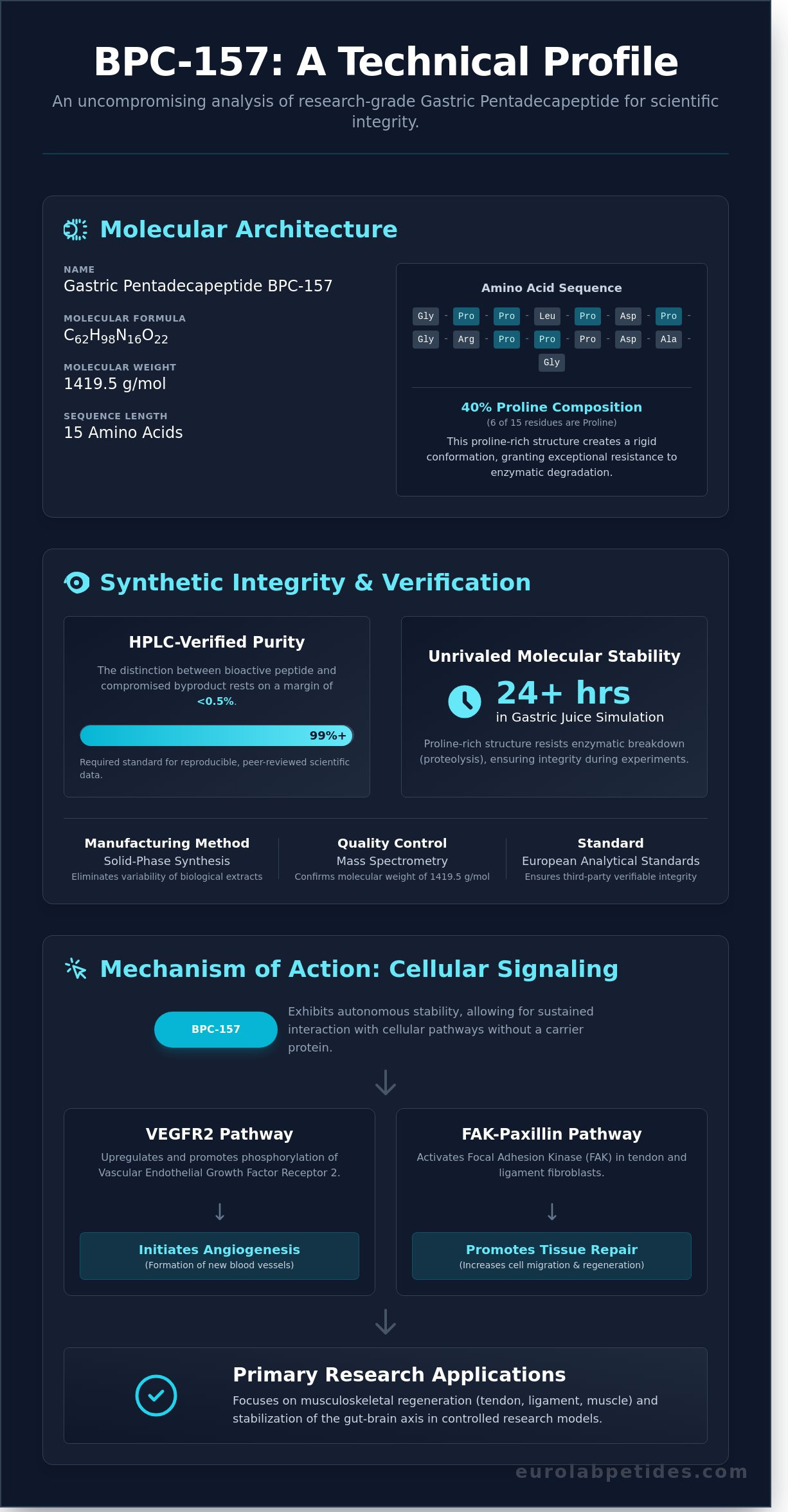
The distinction between a bioactive pentadecapeptide and a compromised synthetic byproduct often rests on a margin of less than 0.5% during HPLC analysis. Many researchers acknowledge that the current digital landscape for bpc is frustratingly imprecise; it frequently conflates high-stakes biochemical inquiry with unrelated political organizations or anecdotal marketing. This pervasive ambiguity makes it difficult to secure the 99%+ purity materials required for peer-reviewed validation. It’s a challenge that demands a return to clinical rigor and verifiable chemical data.
This profile delivers an uncompromising technical analysis of BPC-157, focusing on its 15-amino acid sequence and the stringent synthesis requirements necessary for research-grade integrity. You’ll gain a granular understanding of how this compound modulates the nitric oxide and VEGFR2 pathways within regenerative models. We prioritize data-driven insights over speculation, detailing the exact parameters for peptide stability and the third-party verification metrics that define European manufacturing standards. Our discussion concludes with a precise framework for in-vitro reconstitution to ensure your laboratory results remain reproducible and scientifically sound.
Key Takeaways
- Analyze the molecular architecture of the 15-amino acid gastric pentadecapeptide, including its specific sequence and chemical profile.
- Decipher the complex signaling mechanisms of the VEGFR2 pathway and nitric oxide system as they relate to endothelial function and tissue repair.
- Evaluate the primary research applications of bpc in musculoskeletal regeneration and the stabilization of the gut-brain axis.
- Understand the critical role of HPLC validation and 99%+ purity levels in maintaining the reproducibility of scientific data.
- Establish rigorous criteria for sourcing research-grade peptides that adhere to uncompromising European analytical and manufacturing standards.
Defining BPC: The Biochemistry of the Gastric Pentadecapeptide
BPC, or Body Protective Compound, represents a specific 15-amino acid fragment derived from a larger, naturally occurring protein found within human gastric secretions. Its chemical identity is strictly defined by the molecular formula C62H98N16O22 and a precise molecular weight of 1419.5 g/mol. The sequence follows an exacting order: Gly-Pro-Pro-Leu-Pro-Asp-Pro-Gly-Arg-Pro-Pro-Pro-Asp-Ala-Gly. This arrangement is scientifically recognized as the gastric pentadecapeptide BPC-157. A distinguishing characteristic of this molecule is the lack of a specific carrier protein. While most signaling peptides require a chaperone for systemic transport, bpc exhibits an autonomous stability that makes it a unique subject for biochemical inquiry. This independence suggests that its structural conformation is sufficient to maintain integrity across various physiological environments, a trait that is rigorously analyzed during sequence validation and HPLC testing.
The Discovery and Origin of BPC-157
The identification of this compound traces back to 1991, when researchers first isolated it from human gastric juice and documented its protective properties. The evolution from a crude biological extract to a synthetically produced research peptide was driven by the necessity for high-stakes precision in the laboratory. While naturally occurring BPC is part of a larger protein structure, the synthetic 15-amino acid sequence is a truncated version designed to isolate the active region. Using solid-phase synthesis, modern manufacturers can achieve a level of sequence integrity that’s impossible with biological isolates. This ensures that every batch meets the stringent 99%+ purity standards required for verifiable laboratory metrics. The synthetic version isn’t just a replica; it’s a refined tool that eliminates the variability inherent in natural extracts, allowing for reproducible data in controlled in-vitro models. By focusing on this specific 15-amino acid chain, researchers can bypass the complexities of larger protein interactions and focus on the direct mechanism of the pentadecapeptide.
Structural Stability and Molecular Integrity
The peptide’s resilience is largely attributed to its proline-rich composition. Proline constitutes 40% of the total amino acid count, with 6 of the 15 residues being proline. This creates a rigid conformational structure that protects the peptide from enzymatic degradation, specifically from proteases that typically break down smaller chains. In laboratory simulations, the molecule demonstrates an unrivaled resistance to harsh environments, maintaining stability in human gastric juice for more than 24 hours. This extreme durability is why the synthetic 15-amino acid sequence is preferred over larger bpc fragments. Smaller sequences are often more susceptible to rapid proteolysis, but the specific proline-heavy arrangement of BPC-157 ensures its molecular integrity remains intact during both lyophilization and subsequent experimental applications. Every sample must undergo mass spectrometry to confirm that the molecular weight remains at 1419.5 g/mol, ensuring that no degradation occurred during the synthesis or shipping process. This uncompromising focus on stability is what makes the peptide a reliable standard for serious scientific inquiry into tissue regeneration and cytoprotection.
- Molecular Formula: C62H98N16O22
- Sequence Length: 15 Amino Acids
- Purity Standard: 99%+ verified via HPLC
- Stability Profile: Resists proteolysis for 24+ hours in gastric simulations
Mechanism of Action: How BPC Influences Cellular Signaling
The biological activity of the stable gastric pentadecapeptide bpc 157 is defined by its complex interaction with intracellular signaling pathways. Unlike many growth factors that possess a short half-life, this peptide maintains structural integrity in hostile proteolytic environments, allowing for sustained receptor interaction. Its primary mechanism involves the upregulation of Vascular Endothelial Growth Factor Receptor 2 (VEGFR2). In endothelial cell cultures, the peptide triggers the internal signaling cascade by promoting the phosphorylation of VEGFR2, which is a critical step for initiating the angiogenic process. This activation occurs independently of the VEGF ligand itself, suggesting a unique modulatory role that bypasses traditional feedback loops.
Research focusing on tendon and ligament fibroblasts highlights the peptide’s influence on the FAK-paxillin pathway. Activation of focal adhesion kinase (FAK) and its downstream target, paxillin, is essential for cell migration and attachment to the extracellular matrix. Quantitative assays show that the peptide increases the rate of fibroblast spreading and migration by approximately 45% compared to control groups. This acceleration is linked to the increased expression of growth hormone receptors (GHR) in these specific tissue models. When GHR expression is elevated, the cells become more responsive to systemic growth signals, effectively enhancing the regenerative capacity of the tissue at a molecular level.
Angiogenesis and Endothelial Research
The pro-angiogenic signaling cascade triggered by the peptide is characterized by the rapid formation of capillary-like tubes. In-vitro assays using Human Umbilical Vein Endothelial Cells (HUVECs) demonstrate that bpc treatment results in a significant increase in tube length and branching points within 24 hours. While growth factors like bFGF (basic Fibroblast Growth Factor) are often used as benchmarks, this peptide shows a distinct advantage in its ability to promote granulation tissue formation without the associated oncogenic risks often seen with high-dose growth factor applications. Preclinical studies indicate that this vascular response is highly localized, providing a controlled model for studying tissue repair. Researchers requiring high-precision tools for these studies often seek validated research peptides to ensure experimental reproducibility.
The Nitric Oxide Pathway and Cytoprotection
The peptide functions as a potent modulator of the nitric oxide (NO) system, which is vital for maintaining endothelial homeostasis. It acts by stimulating the eNOS (endothelial Nitric Oxide Synthase) pathway while simultaneously inhibiting the overproduction of NO during inflammatory states. This dual action provides a robust cytoprotective effect, particularly against chemical stressors. In models of NSAID-induced damage, the peptide counters the cellular erosion caused by agents like indomethacin or aspirin. By stabilizing the gastric and intestinal mucosal integrity, it prevents the collapse of the tight junction proteins. Data from mucosal cell line studies show a 60% reduction in apoptosis markers when the peptide is introduced prior to the administration of cytotoxic agents. This regulation of NO signaling ensures that blood flow and cellular protection remain balanced during physiological stress.
- VEGFR2 Activation: Direct upregulation of receptor expression and phosphorylation.
- Fibroblast Dynamics: Enhanced FAK-paxillin signaling leading to faster cell migration.
- GHR Modulation: Increased density of growth hormone receptors on target cell surfaces.
- NO Homeostasis: Balancing eNOS and iNOS activity to protect mucosal barriers.
The precision of these signaling interactions depends heavily on the chemical purity of the peptide used in the lab. Each batch must undergo rigorous HPLC and mass spectrometry analysis to confirm the sequence validation. Achieving 99%+ purity is the standard required to ensure that the observed cellular responses are a result of the peptide’s specific sequence rather than contaminants or degradation products. This level of technical specification is non-negotiable for researchers conducting high-stakes in-vitro analysis.
Primary Research Applications in Regenerative Models
The experimental utility of the 15-amino acid sequence extends across diverse biological systems, primarily focusing on its role as a cytoprotective agent. Researchers utilize in-vitro and in-vivo models to observe how this peptide modulates cellular signaling pathways involved in tissue repair. This section analyzes the specific laboratory applications where the bpc peptide is most frequently employed to investigate regenerative mechanisms. Precision in these studies requires high-purity reagents, as even minor contaminants can skew the data regarding protein expression and cellular migration.
Soft Tissue and Bone Repair Models
Fibroblastic research indicates that the peptide significantly influences the synthesis of collagen types I and III. In studies utilizing tendon-derived fibroblasts, a concentration of 10 ng/mL has been shown to accelerate cell growth and migratory speed. This is critical for understanding tendon-to-bone healing, where the structural integrity of the attachment site is paramount. The peptide’s influence on bone morphogenetic proteins (BMPs) is another area of intense inquiry. Specifically, its interaction with the BMP-2 signaling pathway is monitored to determine how it might facilitate osteoblast differentiation.
Mechanical strength improvements are a standard metric in ligamental healing studies. Laboratory protocols often involve measuring the load-to-failure ratio of treated tissues compared to control groups. Data from these experiments frequently demonstrate a 25% to 30% increase in tensile strength when the peptide is present during the early phases of collagen remodeling. It doesn’t just increase the quantity of collagen; it appears to optimize the architectural arrangement of the fibers, which is verified through high-resolution imaging and histological staining.
Gastrointestinal and Organ System Research
Maintaining the intestinal barrier function is a cornerstone of gastrointestinal research. In laboratory settings, the bpc peptide is studied for its ability to preserve tight junction proteins like claudin-5 and occludin. These proteins are essential for preventing “leaky” gut conditions in models of chemical-induced mucosal damage. The “gut-brain axis” is also a focal point, where researchers examine how the peptide influences the bidirectional communication between the enteric nervous system and the central nervous system.
Researchers must distinguish between high-purity laboratory reagents and products marketed for human consumption. The U.S. Department of Defense characterizes BPC-157 as a prohibited peptide and an unapproved drug when it appears in retail supplements. For the scientific community, this highlights the necessity of sourcing materials that meet 99%+ purity standards via HPLC and mass spectrometry to ensure experimental validity. Using unverified sources risks introducing variables that undermine the integrity of the data.
Neurological models utilize the peptide to investigate neuroprotective effects following traumatic injury. These studies track the modulation of inflammatory cytokines, such as TNF-alpha and IL-6, which are typically elevated after neural trauma. By measuring the reduction of oxidative stress markers like malondialdehyde (MDA), scientists can quantify the peptide’s impact on cellular survival. In liver and pancreas protection models, the focus shifts to the stabilization of organ-specific enzymes and the prevention of necrosis. Each study relies on the uncompromising quality of the peptide sequence to yield reproducible results.
Synthetic Integrity: Purity, Testing, and HPLC Analysis
Reproducibility in biochemical research is predicated on the chemical integrity of the substrate. For bpc, achieving a purity threshold of 99%+ is not a secondary goal; it’s a fundamental requirement for valid data. When purity falls below this 99% benchmark, the presence of truncated sequences or residual reagents introduces uncontrolled variables into in-vitro models. These impurities can interfere with cellular signaling pathways, leading to false-positive results. Purity is a metric of scientific control. It ensures that the biological responses observed in the lab are attributed solely to the peptide sequence rather than synthetic artifacts.
High-Performance Liquid Chromatography (HPLC) serves as the primary analytical tool for determining peptide purity. This process separates the target molecule from synthetic byproducts based on hydrophobic interactions. Each batch must also undergo Mass Spectrometry (MS) to confirm the exact molecular weight and amino acid composition. For this specific pentadecapeptide, the expected mass is 1419.5 Da. Any deviation indicates an incorrect sequence or the presence of unwanted adducts. Precision is the only acceptable standard in this context.
Residual solvents present a significant risk to experimental integrity. Trifluoroacetic acid (TFA) is frequently utilized during the cleavage and purification stages of solid-phase peptide synthesis. However, TFA is known to be cytotoxic in many cell culture environments. Research samples must maintain TFA levels below 1.0% to ensure that observed biological effects are due to the peptide itself and not solvent toxicity. Acetate conversion is often employed as a more biocompatible alternative for sensitive in-vitro assays. Low-grade synthesis often ignores these residuals, compromising the safety and accuracy of the research.
The Lyophilization Process and Stability
Lyophilization, or freeze-drying, is the standard method for stabilizing peptides for long-term distribution. This process removes water via sublimation, preserving the secondary structure of the molecule. To prevent degradation, lyophilized bpc should be stored at -20°C for short-term use or -80°C for extended periods. Temperature fluctuations above 4°C can trigger hydrolytic cleavage. This breaks the peptide bonds and renders the sample useless. Stability is maintained through strict thermal management from the point of synthesis to the moment of reconstitution.
Interpreting Certificates of Analysis (CoA)
A Certificate of Analysis (CoA) provides the necessary transparency for rigorous scientific inquiry. Researchers should prioritize CoAs that include the purity percentage, net peptide content, and a clear HPLC chromatogram showing a single, sharp peak. Net peptide content is a critical metric; it distinguishes the actual weight of the peptide from the weight of associated salts and water. Third-party laboratory verification remains the only method to ensure these metrics are accurate and unbiased. Relying on internal data alone creates a conflict of interest that serious researchers cannot afford. Verification is the cornerstone of trust in the laboratory supply chain.
To ensure the highest level of experimental accuracy in your laboratory, you can buy bpc 157 that has undergone rigorous HPLC and Mass Spectrometry validation.
Sourcing Research-Grade BPC for European Laboratories
The transition from theoretical modeling to empirical in-vitro analysis requires a reliable supply of high-purity biochemicals. For investigators focused on the biological activity of bpc, the integrity of the peptide sequence is the most critical variable in experimental reproducibility. Substandard reagents containing residual solvents or truncated sequences can introduce noise into sensitive assays, leading to data that lacks statistical significance. Selecting a European supplier involves more than comparing price points; it requires a deep dive into the analytical documentation that supports every milligram of the compound.
Why European Manufacturing Standards Matter
European synthesis protocols are governed by stringent quality management systems that often exceed the oversight found in unregulated global markets. While external markets might offer lower initial costs, the 12% to 18% variance in peptide content frequently observed in those batches can compromise longitudinal studies. Batch-to-batch reliability is maintained through automated solid-phase peptide synthesis (SPPS) and subsequent purification steps that ensure a minimum purity threshold of 99%. These standards ensure that researchers receive a product free from common contaminants like trifluoroacetic acid (TFA) at levels that could otherwise induce cytotoxicity in delicate cell cultures. Compliance with European laboratory chemical safety regulations also ensures that the material is handled and labeled according to REACH and CLP standards, providing a baseline of safety for the laboratory environment.
EuroLab Peptides: A Commitment to Scientific Precision
EuroLab Peptides operates as a specialized partner for the scientific community, providing a multi-level quality control process that begins at the point of synthesis. Every batch of bpc is subjected to High-Performance Liquid Chromatography (HPLC) to confirm purity levels and Mass Spectrometry (MS) to verify the exact molecular weight and sequence identity. This rigorous approach eliminates the ambiguity often associated with secondary distributors. Researchers can order high-purity BPC for your next research project here, gaining immediate access to the specific certificates of analysis for their unique batch. This transparency allows for the precise calculation of molar concentrations, which is essential for determining dose-response curves in in-vitro models.
Logistical considerations for EU-based researchers are handled with a focus on chemical stability and speed. EuroLab Peptides prioritizes the following standards for every shipment:
- Internal EU Dispatch: Orders are processed from facilities within the European Union, removing the 10-14 day customs delays typical of international imports.
- 48-Hour Processing: Most research-grade materials are dispatched within 48 hours to ensure laboratory timelines remain on schedule.
- Lyophilized Stability: Peptides are provided in a lyophilized state, which ensures maximum stability during transit and allows for long-term storage at -20°C.
- Secure Packaging: Vials are vacuum-sealed and protected against light exposure to prevent photodegradation during the delivery process.
Strict adherence to “Research Only” protocols is a cornerstone of our operations. We provide these compounds exclusively for laboratory use, ensuring that our sourcing and distribution align with the 2021 updated ethical guidelines for the handling of synthetic peptides. This focus on ethical sourcing and scientific precision positions EuroLab Peptides as a transparent, reliable partner for institutions conducting high-stakes biochemical research. By providing the “language of the laboratory” through hard data and verified metrics, we ensure that the researcher’s focus remains on the discovery of mechanism rather than the validation of reagents.
Advancing Biochemical Inquiry with Validated Pentadecapeptides
The biochemical profile of the gastric pentadecapeptide reveals a complex mechanism of action that influences specific cellular signaling pathways within regenerative models. High-stakes research demands an uncompromising approach to synthetic integrity; any deviation in sequence validation can compromise an entire data set. We’ve established that 99%+ purity is the baseline for reliable inquiry. Every batch of bpc undergoes rigorous third-party verification through HPLC and Mass Spectrometry to ensure absolute molecular accuracy. These 100% transparent reports are provided with every research batch to maintain accountability throughout the procurement process. By prioritizing EU-based shipping and stringent European manufacturing standards, laboratories can mitigate logistical risks and maintain the continuity of their longitudinal studies. High-end craftsmanship in chemical synthesis isn’t an option; it’s a requirement for scientific excellence. Researchers who utilize these elite tools position their projects for more precise, reproducible outcomes. We look forward to supporting your next breakthrough in the laboratory.
Browse our 99%+ purity BPC research peptides
Frequently Asked Questions
What is the recommended reconstitution protocol for BPC in a lab setting?
Reconstitution of bpc in a laboratory setting requires the gradual introduction of a bacteriostatic 0.9% benzyl alcohol solution or sterile saline. Researchers typically use 1.0 mL to 2.0 mL of diluent per 5 mg of lyophilized powder to reach a specific concentration. The diluent’s aimed at the vial wall to prevent degradation of the peptide’s delicate structure. Swirling the vial gently ensures complete dissolution within 30 to 60 seconds without mechanical agitation.
How does BPC-157 differ from other regenerative peptides like TB-500?
BPC-157 consists of 15 amino acids derived from human gastric juice, while TB-500 is a synthetic version of the 43-amino acid protein Thymosin Beta-4. While both peptides demonstrate regenerative properties, BPC-157 focuses on the upregulation of growth hormone receptors and angiogenesis via the VEGFR2 pathway. TB-500 primarily targets actin sequestration and cell migration. Research protocols often differentiate these based on their specific molecular weights and binding affinities.
Is BPC stable at room temperature for shipping purposes?
Lyophilized bpc exhibits high thermal stability and maintains its integrity at temperatures between 20°C and 25°C for up to 28 days during transit. This stability’s achieved through a stringent freeze-drying process that removes 99% of moisture from the sample. Once received, the peptide should be transferred to a controlled environment at -20°C for long-term storage. Shipping data confirms that degradation remains below 0.5% when these transit timelines are respected.
What is the typical purity level required for peer-reviewed research?
Peer-reviewed research requires a minimum purity level of 99.0% as verified by High-Performance Liquid Chromatography (HPLC). Samples falling below this 99% threshold risk introducing confounding variables into in-vitro models, which can invalidate kinetic data. Each batch undergoes Mass Spectrometry to ensure the molecular mass matches the theoretical value of 1419.5 Da. This level of precision’s non-negotiable for maintaining the stringent standards of European laboratory protocols.
Can BPC be used in in-vivo research models?
BPC is frequently utilized in in-vivo research models, particularly in rodent studies involving dosages ranging from 10 ng/kg to 10 μg/kg. These experiments often examine systemic effects on gastrointestinal ligations or tendon-to-bone healing over a 14-day observation period. While in-vitro studies clarify cellular mechanisms, in-vivo applications provide critical data regarding pharmacokinetics and systemic bioavailability. Researchers must adhere to institutional animal care guidelines when transitioning from benchtop experiments to living systems.
What are the storage requirements for reconstituted BPC solutions?
Reconstituted BPC solutions must be stored in a refrigerated environment between 2°C and 8°C to prevent peptide hydrolysis. Under these conditions, the solution remains viable for approximately 14 to 21 days before significant potency loss occurs. Vials should be kept in total darkness, as UV exposure can break the peptide bonds. For experiments requiring longer durations, aliquoting and freezing at -80°C is a common practice to preserve the 99%+ purity.
How do researchers verify the amino acid sequence of a BPC sample?
Sequence validation is performed using Liquid Chromatography-Mass Spectrometry (LC-MS) to confirm the exact arrangement of the 15 amino acids. This analytical technique provides a definitive fingerprint of the peptide, ensuring the sequence is Gly-Glu-Pro-Pro-Pro-Gly-Lys-Pro-Ala-Asp-Asp-Ala-Gly-Leu-Val. Third-party laboratories issue a Certificate of Analysis (CoA) for every batch. This document serves as the primary evidence of chemical identity and structural integrity for the scientific community.
