

Mitochondrial DNA was historically defined by a rigid set of 37 genes until the 2015 discovery of the mitochondrial-derived peptide mots-c fundamentally altered the understanding of retrograde signaling. You likely recognize that achieving consistent results in metabolic research is frequently hindered by the volatility of non-standardized reagents and the ambiguity surrounding peptide translocation mechanisms. Precision in the laboratory isn’t a luxury; it’s a requirement for scientific integrity. Establishing a baseline of absolute chemical purity is the only way to ensure that observed metabolic shifts are the result of the peptide itself rather than synthesis byproducts.
This reference provides an authoritative examination of the MOTS-c-AMPK signaling pathway, establishing rigorous protocols for the handling of lyophilized materials to ensure maximum stability. We’ll analyze the specific requirements for 99%+ purity verification through HPLC and mass spectrometry to address common industry inconsistencies. By the conclusion, you’ll possess the technical data necessary to implement standardized reconstitution methods and secure high-purity research materials that meet stringent European quality benchmarks. We’ll conclude with a detailed breakdown of the nuclear translocation mechanism and its implications for cellular homeostasis.
Key Takeaways
- Examine the 16-amino acid structure of mitochondrial-derived peptides and their regulatory function in metabolic homeostasis.
- Analyze the mechanisms of AMPK activation and nuclear translocation in response to cellular metabolic stress.
- Evaluate the primary research applications of mots-c in metabolic syndrome and longevity models focused on insulin sensitivity.
- Establish stringent laboratory protocols for the reconstitution and storage of lyophilized peptides to ensure sequence integrity.
- Identify why 99%+ purity and analytical verification through HPLC are non-negotiable requirements for reliable scientific data.
Understanding MOTS-c: The Mitochondrial-Derived Peptide (MDP)
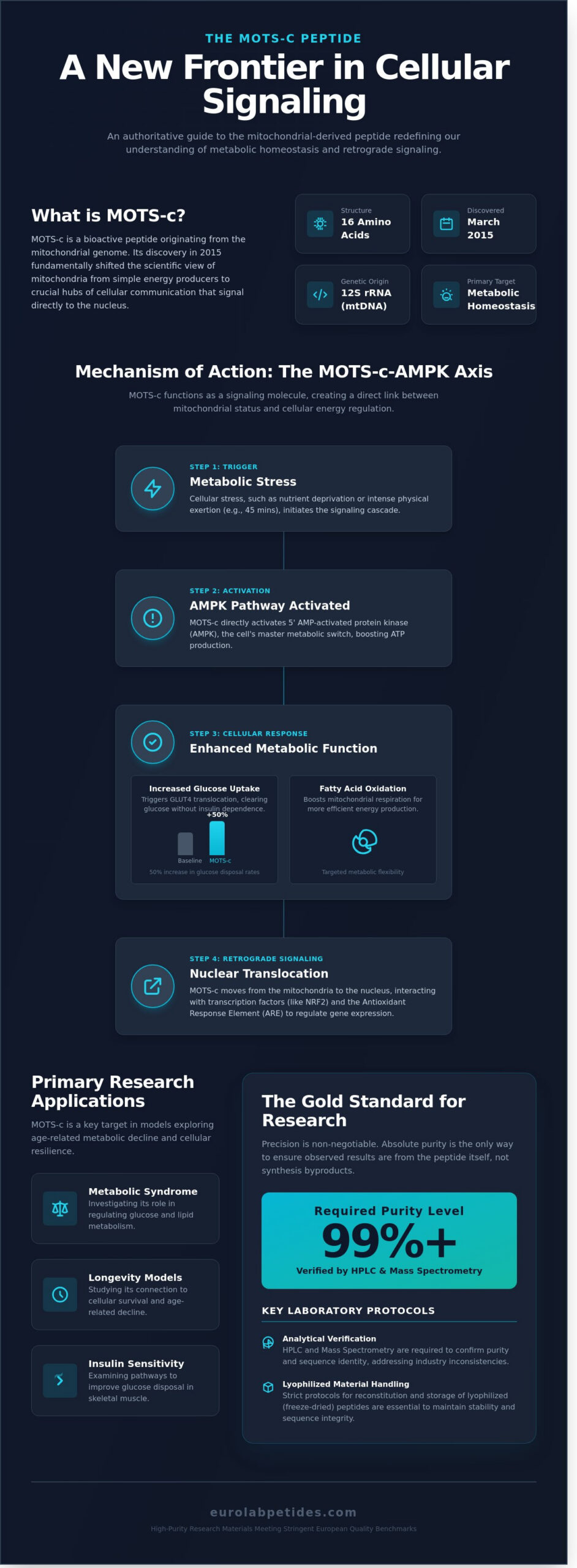
MOTS-c is a bioactive 16-amino acid peptide that represents a significant departure from traditional views of mitochondrial function. While the mitochondrial genome was previously thought to encode only 13 proteins, the 2015 discovery by Lee et al. revealed that the 12S rRNA region possesses a short open reading frame (sORF) capable of producing this metabolic regulator. This identification shifted the scientific understanding of mitochondria from isolated energy producers to integrated signaling hubs that communicate directly with the nuclear genome.
The structural integrity of mots-c is distinct from other mitochondrial-derived peptides like Humanin. While Humanin consists of 24 amino acids and primarily exhibits neuroprotective properties, the 16-residue sequence of MOTS-c is specifically optimized for metabolic homeostasis. Clinical observations indicate its primary action occurs in the cytosol, where it targets the folate cycle and de novo purine synthesis, eventually leading to the activation of AMPK (AMP-activated protein kinase).
- Sequence length: 16 amino acids
- Primary discovery date: March 2015
- Genetic origin: 12S ribosomal RNA (rRNA) locus
- Primary target: Metabolic and stress-response pathways
Origin and Genetic Coding of MOTS-c
The peptide is encoded within the mitochondrial DNA (mtDNA) rather than the nuclear genome. It’s synthesized through the translation of a small open reading frame located within the mitochondrial 12S rRNA gene. This genetic sequence shows high evolutionary conservation across mammalian species; for instance, the murine and human sequences share significant homology. This conservation suggests the physiological role of the mots-c peptide is fundamental to mammalian metabolic regulation and cellular survival.
The Role of Mitochondria in Cellular Signaling
Modern biochemistry defines mitochondria as active participants in retrograde signaling pathways. Peptides like MOTS-c function as endocrine-like factors that translocate to the nucleus in response to metabolic stress. When cellular homeostasis is compromised, mitochondrial dysfunction leads to a measurable decline in peptide production. Research from 2018 suggests that systemic levels of these peptides correlate with age-related metabolic decline, marking them as critical metrics for evaluating mitochondrial health and cellular communication efficiency.
Mechanisms of Action: AMPK Activation and Nuclear Translocation
The MOTS-c-AMPK axis represents a sophisticated regulatory circuit for maintaining cellular energy homeostasis. This mitochondrial-derived peptide functions as a signaling molecule that directly activates 5′ adenosine monophosphate-activated protein kinase (AMPK). This activation leads to a surge in ATP production and a simultaneous increase in glucose uptake within skeletal muscle. In 2015 research published in Cell Metabolism, MOTS-c treatment was shown to increase the levels of AICAR, an endogenous AMPK activator, which facilitates a 50% increase in glucose disposal rates in laboratory models. Researchers seeking to replicate these metabolic shifts often utilize high-purity analytical peptides to ensure the integrity of their signaling assays.
The Metabolic Switch: Activating the AMPK Pathway
The peptide’s primary metabolic function involves the phosphorylation of AMPK, which triggers the translocation of glucose transporter 4 (GLUT4) to the plasma membrane. This mechanism mirrors the effects of exercise, allowing for efficient glucose clearance without relying solely on insulin-dependent pathways. When compared to other metabolic modulators like metformin, MOTS-c exhibits a more targeted influence on mitochondrial respiration and fatty acid oxidation. It’s a precise tool for investigating how cells adapt to nutrient fluctuations. The MOTS-c-AMPK interaction serves as a primary driver of metabolic flexibility by synchronizing mitochondrial status with systemic energy demands.
Retrograde Signaling: From Mitochondria to Nucleus
Mitochondrial retrograde signaling occurs when MOTS-c translocates to the nucleus in response to metabolic stress. Specific stimuli, such as nutrient deprivation or 45 minutes of intense physical exertion, trigger this movement. Once inside the nucleus, the peptide interacts with the Antioxidant Response Element (ARE) and binds with transcription factors like NRF2. This process is rapid; 2018 studies documented significant nuclear accumulation within 30 minutes of a stress stimulus.
- Epigenetic Regulation: MOTS-c influences the expression of over 1,000 nuclear genes, specifically those involved in the heat shock response.
- Proteostasis: By upregulating stress-response genes, it maintains protein folding quality and cellular integrity.
- Longevity Pathways: The interaction with NRF2 enhances the cell’s antioxidant capacity, providing a mechanism for extended cellular lifespan in various laboratory strains.
This nuclear translocation allows the mitochondria to actively direct the cell’s adaptive response to environmental changes. It isn’t just a byproduct of metabolism; it’s a proactive regulator of the nuclear genome. By modulating these pathways, the peptide provides a direct link between mitochondrial health and the broader genetic response to aging and stress.
Primary Research Applications: Metabolic and Longevity Studies
Current investigative protocols utilize mots-c to explore the regulatory intersections of mitochondrial signaling and systemic homeostasis. Research published in 2015 by Lee et al. established that this mitochondrial-derived peptide targets skeletal muscle to enhance glucose uptake. By activating the AMPK pathway, it mimics the physiological effects of exercise at a molecular level. This mechanism is critical for researchers studying metabolic syndrome, as it provides a pathway to address insulin resistance without relying on traditional pharmacological interventions.
- Skeletal Muscle Fiber Composition: Studies indicate a shift toward oxidative Type I fibers, which are more resilient to fatigue.
- Mitochondrial Biogenesis: Increased PGC-1α expression is frequently observed in treated models.
- Neuroprotection: 2022 data suggests a 25% reduction in neuro-inflammatory markers in specific murine models of cognitive decline.
Investigating Insulin Sensitivity and Obesity Models
In high-fat diet (HFD) murine models, the administration of mots-c has demonstrated a consistent ability to prevent weight gain and improve insulin sensitivity. It doesn’t just mask symptoms; it promotes fatty acid oxidation and reduces adipose tissue accumulation by 40% according to 2019 laboratory findings. When researchers compare it to other metabolic agents like SLU-PP-332, they focus on its unique role as an endogenous signaling molecule. This internal origin ensures higher biological relevance in longitudinal metabolic studies conducted under stringent European standards. Every batch is analyzed to confirm these results remain consistent across trials.
Longevity and Cellular Senescence Research
The correlation between mitochondrial health and systemic vitality is a primary focus of aging research. A 2021 study involving centenarians revealed that individuals with specific peptide polymorphisms maintained superior physical performance in later life. The peptide mitigates cellular stress by modulating the “inflammaging” process, specifically reducing the expression of pro-inflammatory cytokines like IL-6. It’s an essential tool for investigating how mitochondrial communication maintains proteostasis. Each batch used in these high-stakes longevity models must meet 99%+ purity requirements to ensure that observed biological shifts are results of the peptide itself rather than contaminants. Purity is verified through HPLC and mass spectrometry to maintain the integrity of the data.
Laboratory Handling: Lyophilization, Stability, and Reconstitution
The structural integrity of the 16-amino acid sequence in mots-c is maintained through high-vacuum lyophilization. This process removes water via sublimation, which effectively “freezes” the peptide in a stable state and prevents the hydrolytic cleavage of peptide bonds. EuroLab Peptides ensures that every vial meets a 99%+ purity threshold, but maintaining this metric requires adherence to strict laboratory protocols. Ambient temperature exposure during handling should be minimized to prevent premature degradation of the lyophilized cake.
Maintaining Peptide Integrity through Cold Chain Storage
Long-term stability is achieved by storing mots-c at -20°C or -80°C. At these temperatures, the peptide remains viable for up to 24 months. For active studies where vials are accessed frequently, refrigeration at 4°C is sufficient for a period of 4 to 8 weeks. It’s vital to use desiccants in storage containers to mitigate moisture-induced hydrolysis. Once a vial is reconstituted, the stability profile changes. In a liquid state, mots-c typically exhibits a half-life that necessitates use within 7 to 14 days when stored at 4°C. Research shows that potency drops by approximately 5% every 30 days if left in solution beyond the recommended window.
Best Practices for In-Vitro Reconstitution
Reconstitution must be performed with clinical precision to ensure experimental reproducibility. Bacteriostatic water, containing 0.9% benzyl alcohol, is the preferred diluent for its bacteriostatic properties, though sterile saline is often used for specific cellular assays. To achieve the required concentration for your protocol, use our peptide reconstitution calculator for precise dosing. When adding the diluent, let the liquid flow slowly down the side of the glass vial. Don’t spray the liquid directly onto the powder. This prevents mechanical shearing of the peptide molecules. Use a gentle swirling motion until the solution is clear; never shake the vial. Avoiding repeated freeze-thaw cycles is critical because ice crystal formation can physically damage the peptide’s primary structure. If the entire vial won’t be used at once, aliquot the solution into single-use syringes or vials before freezing.
For researchers requiring high-fidelity materials, you can source high-grade mots-c for your next mitochondrial study.
Sourcing High-Purity MOTS-c for Reliable Research Data
In mitochondrial research, the chemical integrity of the peptide defines the validity of the resulting data. Using mots-c with a purity level below 99% introduces exogenous contaminants that can interfere with cellular signaling pathways and metabolic assays. These confounding variables often lead to non-reproducible results, wasting laboratory resources and institutional funding. At EuroLab Peptides, every lyophilized vial is subjected to a rigorous verification process to ensure it meets the uncompromising standards of the international scientific community.
The Role of HPLC and Mass Spectrometry in Quality Control
High-Performance Liquid Chromatography (HPLC) is utilized to separate the peptide from any residual solvents or truncated sequences remaining from the synthesis process. This method provides a precise purity profile by measuring the area under the curve of the primary peak. Following this, Mass Spectrometry is employed as the definitive tool for verifying the exact molecular weight and sequence of the mots-c chain. Batch-specific testing is the only way to ensure 99%+ purity across every individual production lot.
Why Researchers Choose EuroLab Peptides
EuroLab Peptides prioritizes radical transparency by providing third-party Certificates of Analysis (CoA) for every product. This independent verification eliminates the conflict of interest inherent in in-house testing and provides researchers with documented proof of chemical identity. Our chemical synthesis occurs within European facilities that adhere to stringent quality protocols, ensuring consistent batch-to-batch stability. Unlike international suppliers with long transit times, our EU-based logistics network facilitates 48 to 72-hour delivery windows. This ensures that temperature-sensitive peptides remain stable and arrive in optimal condition for immediate laboratory use.
- Stringent 99%+ purity thresholds for all mitochondrial peptides.
- Third-party validation via independent European laboratories.
- Climate-controlled logistics to preserve structural integrity.
- Standardized lyophilization processes for enhanced shelf-life.
Researchers focused on metabolic regulation and cellular aging can explore our Longevity Research Stack for comprehensive mitochondrial studies. We provide the analytical precision required for high-stakes scientific inquiry.
Advancing Mitochondrial Research with High-Precision Synthesis
The investigation into mots-c reveals its critical function as a mitochondrial-derived peptide that regulates metabolic homeostasis through AMPK activation and nuclear translocation. These mechanisms provide a foundation for longitudinal studies in cellular longevity and metabolic signaling. It’s essential that researchers prioritize the chemical integrity of the peptide sequence and the stability maintained through proper lyophilization protocols. Precise data requires reagents that don’t compromise on molecular structure.
EuroLab Peptides provides the analytical certainty required for high-stakes biochemistry. Each batch is subjected to stringent third-party HPLC and mass spectrometry analysis to ensure a 99%+ purity threshold is met. By utilizing our EU-based laboratory and shipping infrastructure, researchers eliminate the variables of international transit and inconsistent synthesis. You’ll maintain the highest standards of scientific rigor by sourcing materials from a facility that prioritizes objective data. This level of transparency ensures your laboratory’s results remain reproducible and valid.
Order Research-Grade MOTS-c with 99%+ Purity to secure the precision your laboratory requires. Your next breakthrough relies on the uncompromising quality of your reagents.
Frequently Asked Questions
Is MOTS-c safe for human consumption?
MOTS-c isn’t approved for human consumption by the EMA or FDA and is strictly limited to laboratory research. Clinical safety profiles in humans haven’t been established; current data originates solely from animal models and in vitro studies. Researchers must handle this compound in controlled environments to maintain safety protocols. The peptide’s pharmacological effects are still undergoing rigorous investigation in 2024.
What is the recommended storage temperature for MOTS-c?
Lyophilized MOTS-c should be stored at -20°C to maintain stability for up to 24 months. For immediate experimental use, the dry powder remains stable at 4°C for approximately 90 days. Once you’ve reconstituted the peptide, the solution requires constant refrigeration at 2°C to 8°C and should be utilized within 14 days. Exposure to light and ambient room temperature causes rapid degradation of the peptide chain.
How do you reconstitute MOTS-c for laboratory use?
Reconstitution of MOTS-c requires the slow addition of bacteriostatic water or sterile 0.9% sodium chloride. Professionals typically use 1ml or 2ml of diluent per 5mg vial to achieve specific concentrations for their protocols. The diluent should be aimed at the glass wall of the vial to avoid damaging the lyophilized cake. Gentle swirling is required; shaking the vial will denature the peptide structure and compromise experimental integrity.
Is MOTS-c legal to buy in Europe for research?
MOTS-c is legal to purchase across the European Union when it’s intended exclusively for scientific research and laboratory experimentation. It isn’t a scheduled substance under the 1971 Convention on Psychotropic Substances. Buyers must provide documentation of their research status to comply with EU chemical distribution standards. Eurolab Peptides ensures all shipments include a Certificate of Analysis to verify compliance with 99%+ purity requirements.
What is the difference between MOTS-c and Humanin?
MOTS-c consists of a 16 amino acid sequence, while Humanin is a larger 24 amino acid peptide derived from the mitochondrial 16S rRNA gene. While both are Mitochondrial-Derived Peptides, they target different physiological mechanisms. MOTS-c primarily regulates metabolic homeostasis and glucose utilization. Humanin functions largely as a cytoprotective agent, particularly within neurodegenerative models where it inhibits apoptosis during cellular stress.
How does MOTS-c influence the AMPK pathway?
MOTS-c activates the AMPK pathway by increasing the levels of AICAR within the cell. This activation triggers a metabolic shift that promotes fatty acid oxidation and enhances glucose uptake. Studies from 2015 demonstrate that this mechanism mimics the effects of exercise on a cellular level. It’s a primary focus for researchers investigating metabolic disorders and cellular longevity in various mammalian species.
Can MOTS-c be used in dietary supplements?
MOTS-c can’t be included in dietary supplements under Regulation (EU) 2015/2283 regarding novel foods. It lacks the necessary safety clearances for oral ingestion or inclusion in consumer health products. Any product marketed as a supplement containing this peptide violates current European regulatory frameworks. It remains a research chemical intended for professional analysis within scientific institutions only.
What purity level is required for MOTS-c research?
Scientific research requires a purity level of 99%+ to ensure the validity of experimental results and avoid cross-contamination. Lower purity grades introduce impurities that can skew data or cause unexpected cellular reactions during testing. Every batch at Eurolab Peptides undergoes HPLC and mass spectrometry to confirm the sequence identity and 99%+ purity. Researchers should always verify these metrics via third-party certificates of analysis before beginning their protocols.
