

A purity result alone does not establish whether a peptide is appropriate for preclinical or animal research. Effective peptide sourcing for preclinical studies also depends on synthesis scale, analytical documentation, and how well the material fits the intended research use.
Purity matters because impurities and batch variability can affect the interpretation of research results. The right specification depends on the study design, the amount of material needed, and the evidence required to characterize it. A percentage without clear analytical context can leave important questions unanswered.
This article explains how to assess purity and analytical data, match synthesis scale to study needs, and consider regulatory support when planning research. It also outlines what a professional supplier contributes and which project details help inform sourcing decisions, so you can evaluate the factors that matter before preclinical work begins.
Key Takeaways
- Assess purity alongside the analytical documentation that explains how the peptide was characterized.
- Match synthesis scale to the study’s material requirements and planned research use.
- Consider whether analytical and regulatory support aligns with your preclinical study’s documentation needs.
- Evaluate suppliers by the evidence and quality-control information they provide, not by a purity figure alone.
Analytical, quality, and regulatory support
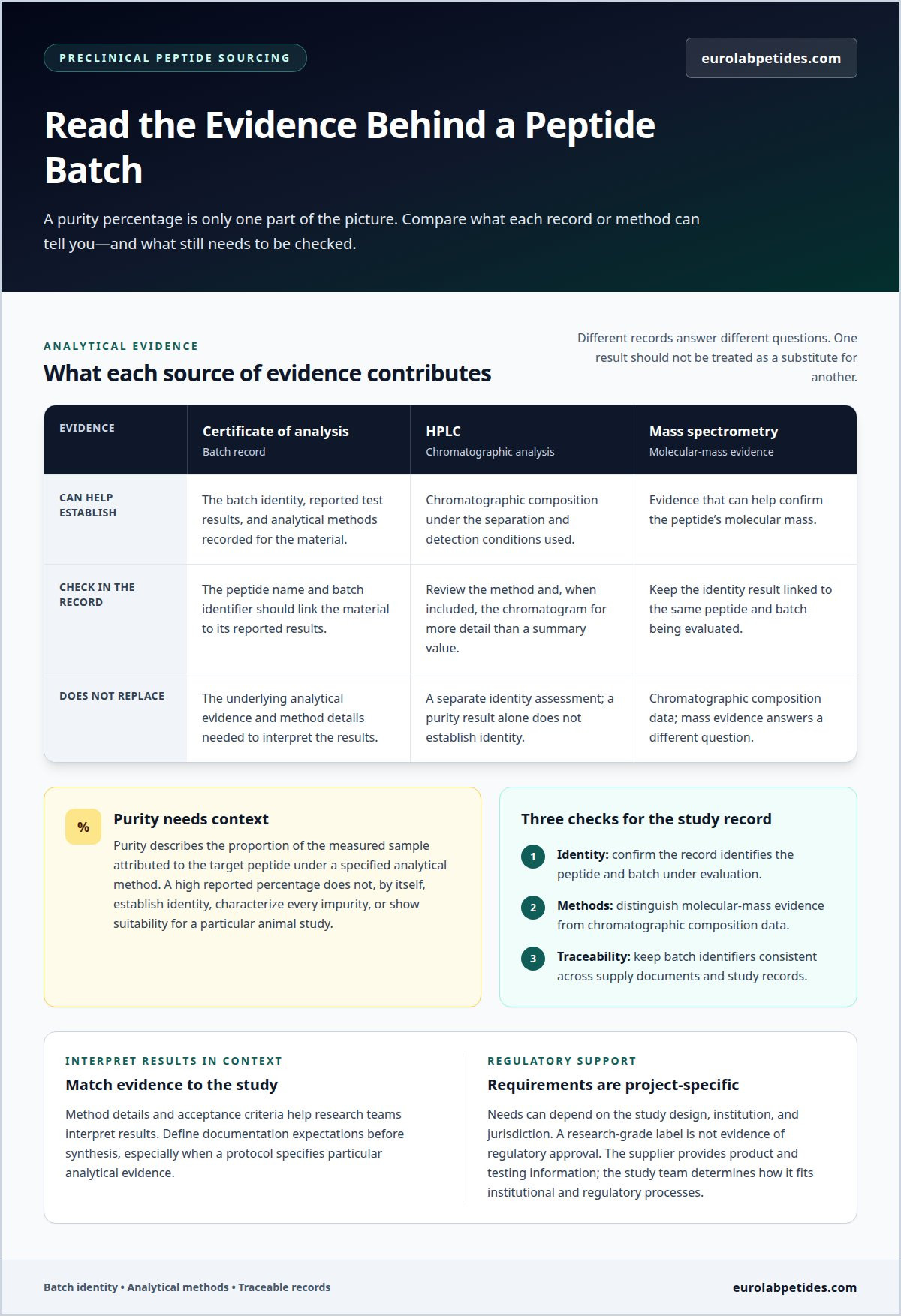
Analytical documentation links a peptide batch to the material used in a study. A certificate of analysis (CoA) can record batch identity, test results, and analytical methods. High-performance liquid chromatography can assess chromatographic composition, while mass spectrometry can help confirm molecular mass. These methods answer different questions, so one result should not be treated as a substitute for the other.
Check that records identify the tested material. A useful document links the peptide name and batch identifier to the reported results. Method details and acceptance criteria help research teams interpret those results in context. When comparing batches, consistent identifiers and comparable analytical methods support clearer interpretation. A chromatogram or mass spectrum can provide more detail than a summary value, when included.
Quality support also depends on traceability across production and testing. This connection matters when study records, sample labels, and batch documents are assembled. Clarify the intended research use and required documentation before synthesis begins, especially when a protocol specifies particular analytical evidence.
Regulatory documentation needs are project-specific. Requirements can depend on the study design, institution, and jurisdiction, so a research-grade label should not be treated as evidence of regulatory approval. Define the documentation needed for the planned work and its destination. A supplier provides product and testing information; the study team determines how that information fits institutional and regulatory processes.
- Identity: confirm that the analytical record identifies the peptide and batch under evaluation.
- Methods: distinguish evidence of molecular mass from chromatographic composition data.
- Traceability: keep batch identifiers consistent across supply documents and study records.
These checks make peptide sourcing for preclinical studies more evidence-led and can expose gaps before material enters the study workflow. Align documentation expectations with the protocol, then assess whether the available analytical evidence supports the intended research use.
Peptide purity for research and animal studies
Synthetic peptides are chemically assembled, while recombinant peptides are produced using biological expression systems. Modified peptides contain deliberate structural changes, such as a substituted residue, so the appropriate type depends on the target sequence and study question.
To preserve stability, follow the supplier’s product-specific storage and reconstitution instructions, and avoid unnecessary handling. Repeated freeze-thaw cycles, for example, expose material to changing conditions. Aliquoting and minimizing exposure during use can help manage that risk.
Purity describes the proportion of the measured sample attributed to the target peptide under a specified analytical method. A high reported percentage does not, by itself, establish identity, characterize every impurity, or show that the material suits a particular animal study. Interpretation depends on the method, the peptide’s characteristics, and the intended experimental use.
A purity result from chromatography reflects the separation and detection conditions used; it does not automatically characterize every component in the sample. A separate identity assessment, such as mass spectrometry, can provide complementary evidence. Keep the method and batch information linked to the result.
Purity requirements should reflect the study’s purpose. A screening experiment and a study comparing responses across batches may need different documentation. Before selecting material, the study team should define relevant acceptance criteria, including how identity, impurity profile, and batch consistency affect interpretation.
- Sequence: confirm that the peptide form, including any modification, matches the study design.
- Evidence: interpret purity alongside identity data and the analytical method used.
- Handling: use product-specific storage and reconstitution guidance rather than assuming all peptides behave alike.
For animal research, material quality is one part of experimental control, not a substitute for an appropriate study protocol. Clear specifications and consistent handling make it easier to interpret results and distinguish peptide-related variation from differences in study execution.
No production type is universally preferable for preclinical research. The choice depends on the required peptide form and the study question. Whatever production approach is used, assess identity, purity, and batch consistency against the study’s acceptance criteria.
Peptide quantity and synthesis scale
Plan the requested amount around the study protocol, not an arbitrary batch size. The sequence, purity target, and downstream testing all shape the synthesis specification.
Cost Factors by Sequence and Order
Custom peptide costs depend on sequence length, requested purity, and quantity. Longer sequences can require more complex synthesis, while higher purity targets can involve additional purification and analysis. Larger orders affect the amount produced and may change the overall quote, but no single factor determines cost on its own.
For a meaningful estimate, define the exact sequence, modifications, purity specification, and usable amount. A short, unmodified sequence and a longer, modified sequence have different production requirements, even at similar quantities. Clarify whether the requested amount refers to crude material or purified peptide, since these describe different deliverables.
Lead Times and Minimum Orders
There is no universal lead time or minimum order quantity for custom peptides. Both depend on sequence complexity, requested scale, purification requirements, and analytical work. A straightforward sequence may involve different production steps from a modified sequence or one with demanding purity criteria, so the project specification shapes the schedule and minimum feasible batch.
Set the sequence and documentation requirements before production planning. Changes to the sequence or purity target can alter the workflow, while testing requirements add steps after synthesis. If a study has a fixed start date, consider production and analytical review together rather than as separate tasks.
Plan quantity for the complete study workflow. Include planned experiments, analytical use, and material needed for repeat work. An animal study, for example, may require material across multiple groups and stages. The protocol determines the total, not a generic order size.
- Define: sequence, modifications, purity target, and requested quantity.
- Align: production scale with the protocol and required analytical work.
- Schedule: account for synthesis, purification, testing, and review.
These details give a supplier a clear basis for assessing scale, timing, and production requirements, without assuming a standard minimum or delivery period.
Which U.S. suppliers provide research-grade peptides for preclinical studies?
Supplier fit depends on the peptide and study requirements, not the company name alone. A U.S. research team can compare custom synthesis providers and suppliers of established research peptides using the same project criteria. A custom sequence with a specified modification, for example, requires different production capabilities from a standard sequence.
Start by defining the requested material: its sequence, modifications, purity target, and required quantity. Then determine which supplier can provide the necessary synthesis scope and analytical documentation. Product descriptions or project responses should distinguish peptide identity from reported test results.
Next, assess the evidence linked to the supplied batch. Look for documentation that identifies the peptide and connects results to a batch identifier. Chromatographic purity data and mass spectrometry results provide different information, so assess each against the study’s requirements. A research-grade label alone does not describe the analytical methods or establish suitability for a particular protocol.
For animal studies, include supply continuity and documentation needs in the comparison. A project using the same peptide across several study stages benefits from clear batch records and defined specifications. Changes to sequence, quantity, or purity target can also change production and testing requirements. Set these requirements before selecting a supplier or finalizing the study schedule.
- Custom synthesis: match sequence and modification capability to the protocol.
- Research peptides: confirm that the offered peptide identity fits the planned work.
- Quality evidence: examine batch-linked analytical records and methods.
- Project fit: align quantity, documentation, and supply planning with study needs.
A U.S. supplier comparison is most useful when each candidate is assessed against the same written specification. This makes differences in synthesis scope, purity documentation, and project support easier to evaluate without relying on broad quality claims. For research on longevity, weight management, tissue repair, or cognitive function, align the peptide category and supporting documentation with the study’s defined purpose.
EuroLab Peptides
EuroLab Peptides supplies research-grade peptides for studies focused on longevity, weight management, tissue repair, and cognitive function. Its quality-control process combines in-house testing with independent third-party laboratory testing to assess purity and consistency.
For preclinical research planning, use the research focus to identify a relevant peptide category, then review the available quality information. Longevity & Vitality Research, Weight Management Research, Tissue Repair & Recovery Research, and Cognitive Function Research address distinct areas of scientific inquiry. The study design should guide the choice.
EuroLab Peptides supplies research peptides for these areas. If you are evaluating sourcing options for your study, contact EuroLab Peptides to discuss your research requirements.
Set the Next Study Up for Clarity
Build the sourcing decision around the requirements your research team needs for the next phase. A clearly defined peptide scope helps keep material selection aligned with study objectives and documentation needs. For peptide sourcing for preclinical studies, that alignment is a practical starting point for focused project planning.
EuroLab Peptides offers research in Longevity & Vitality, Weight Management, and Tissue Repair & Recovery. These areas can help teams define a starting point for research planning. Let the study protocol guide the research focus and material requirements.
Bring your research focus and project requirements into the next conversation. Discuss your research needs with EuroLab Peptides and take a considered step toward planning your work.
Frequently Asked Questions
What peptide purity and characterization standards are needed for preclinical studies?
No single purity specification suits every preclinical study. Define acceptance criteria based on the study objectives, peptide structure, and planned analysis. A protocol comparing related sequences, for example, may require clear characterization of each material, while exploratory work may prioritize confirming peptide identity. Document the rationale and apply the criteria consistently across study groups.
How do peptide suppliers verify identity, purity, and batch consistency?
Mass spectrometry can help assess molecular mass, while chromatography can characterize separated components. For batch comparisons, consistent methods and clear batch identifiers make records easier to interpret. Review each method alongside its result: a single purity value does not establish every aspect of identity or consistency.
What documentation should peptide suppliers provide, such as certificates of analysis and endotoxin results?
Documentation should identify the peptide and relevant batch, and present the analytical results associated with that material. A certificate of analysis can summarize testing, while method details help interpret the findings. Endotoxin results are relevant when required by the study design or protocol. Define documentation needs before ordering, then align the supplied records with study files.
How can peptide suppliers support compliance with U.S. regulations when sourcing peptides for preclinical research?
Suppliers support project documentation by providing accurate product identity, batch records, and applicable analytical information. These materials help research teams organize sourcing records, but do not by themselves establish regulatory compliance. Applicable requirements depend on the study context and institutional processes. A team can map supplier documents to the records required by its protocol and research oversight process.
How can researchers assess supplier quality, traceability, and GMP status?
Assess traceability through records that link the peptide, batch identifier, and analytical documentation. Evaluate quality claims by examining supporting evidence rather than relying on labels alone. GMP status requires relevant, specific documentation; a certificate of analysis is not proof of GMP status. For a sourcing decision, record which evidence supports each required quality or traceability criterion.
What are the risks of using low-purity or improperly sourced peptides in preclinical studies?
Uncharacterized impurities or uncertain material identity can complicate the interpretation of experimental results. If batches vary, observed differences may reflect material variation rather than the study variable. Inadequate sourcing records can also make it harder to reconstruct which material was used.
