

The discovery of SLU-PP-332 as a high-affinity pan-ERR agonist has provided researchers with a precise molecular switch to modulate aerobic metabolism, making slu-pp-332 for energy expenditure studies a critical area of metabolic inquiry. In the rigorous field of biochemical modeling, you understand that inconsistent purity and vague reconstitution protocols can compromise months of longitudinal data. It’s a common frustration to navigate the complexities of ERR pathway interactions when the tools available don’t meet the high-stakes precision your laboratory requires.
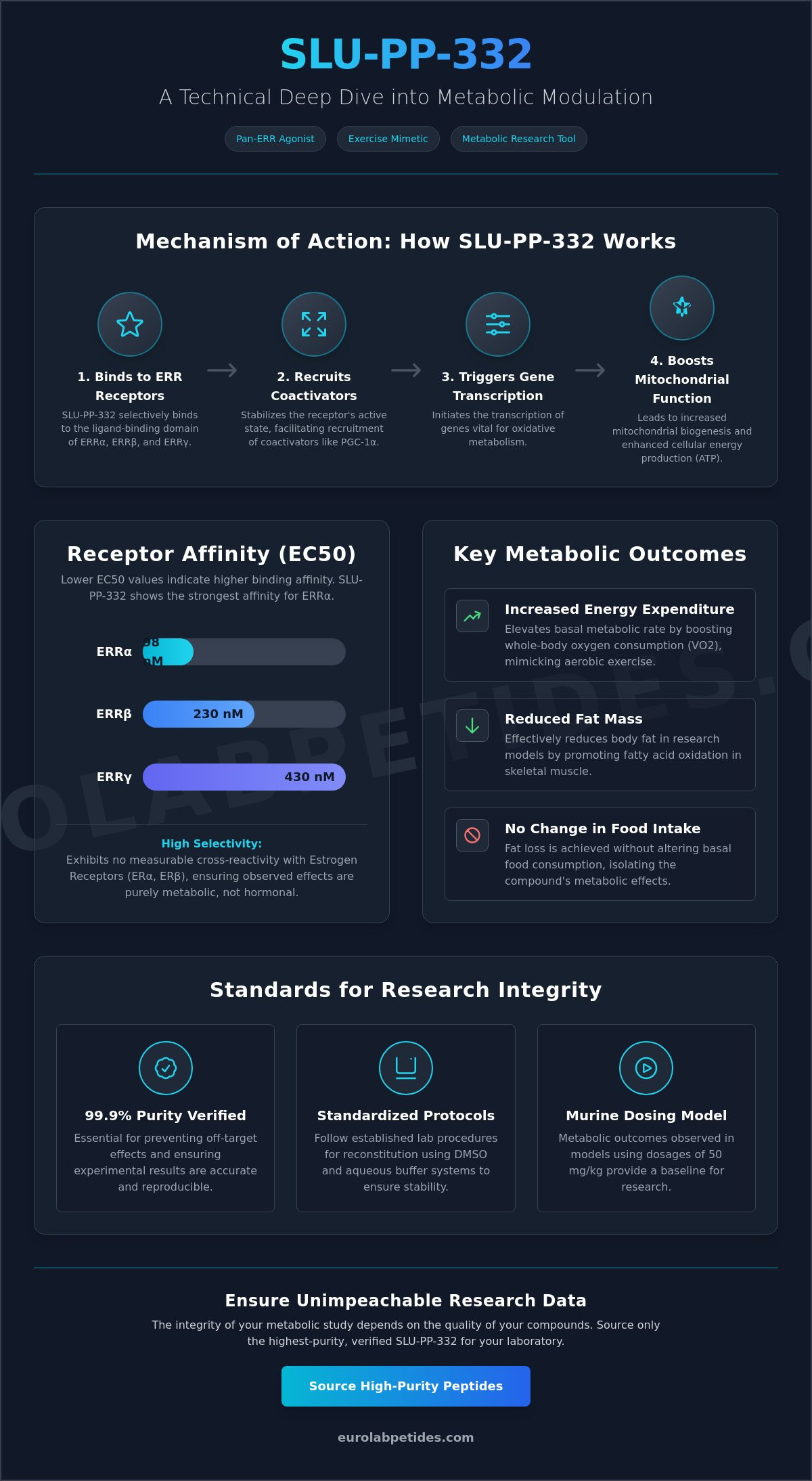
This technical analysis clarifies the mechanism of action for ERR activation, delivering a framework for implementing stable research protocols based on established EC50 values of 98 nM for ERRα, 230 nM for ERRβ, and 430 nM for ERRγ. We’ll examine the metabolic outcomes observed in 50 mg/kg murine dosing models and outline the standards for sourcing verified 99.9% purity peptides to ensure your results remain beyond reproach. By prioritizing empirical data and objective metrics, this overview serves as a definitive resource for the professional research community.
Key Takeaways
- Define the biochemical role of SLU-PP-332 as a pan-ERR agonist and examine its regulatory effects on the ERRα, ERRβ, and ERRγ pathways.
- Assess the methodology behind utilizing slu-pp-332 for energy expenditure studies to observe changes in metabolic flux and skeletal muscle fatty acid oxidation.
- Review the efficacy of SLU-PP-332 in reducing fat mass within metabolic research models without necessitating changes in basal food intake.
- Establish standardized laboratory procedures for the reconstitution and stabilization of SLU-PP-332 using DMSO and aqueous buffer systems.
- Validate research integrity by identifying the impact of peptide purity on experimental outcomes and the prevention of off-target biochemical interactions.
Molecular Mechanism of SLU-PP-332 as a Pan-ERR Agonist
SLU-PP-332 is defined as a first-in-class synthetic agonist specifically engineered to target the Estrogen-Related Receptor (ERR) family. This compound represents a significant advancement in metabolic modeling, particularly when utilizing slu-pp-332 for energy expenditure studies. The molecule functions by binding to the ligand-binding domain (LBD) of three distinct orphan nuclear receptors: ERRα, ERRβ, and ERRγ. By stabilizing the active conformation of these receptors, the agonist facilitates the recruitment of coactivators, which subsequently triggers the transcription of genes involved in mitochondrial biogenesis and oxidative metabolism. For a foundational summary of its chemical structure and primary functions, this SLU-PP-332 Overview provides technical context for its role as a molecular tool.
A critical attribute of SLU-PP-332 is its strict selectivity. Despite the structural similarities between ERRs and classical estrogen receptors (ERα and ERβ), this agonist exhibits no measurable cross-reactivity with the latter. This distinction is vital for research integrity. It ensures that observed physiological changes are the result of metabolic pathway modulation rather than unintended estrogenic signaling. In laboratory models, this high degree of specificity allows for the isolated study of ERR-mediated transcriptional programs without the confounding variables associated with hormonal receptor activation.
The Role of Estrogen-Related Receptors (ERRs) in Metabolism
ERRs are classified as orphan nuclear receptors because they lack identified endogenous ligands. They are expressed most prominently in tissues with high metabolic demands, such as skeletal muscle, the heart, and the liver. These receptors don’t operate in isolation; they coordinate closely with the transcriptional coactivator PGC-1α. This partnership is the primary driver for regulating gene expression related to cellular energy sensing. When SLU-PP-332 activates these receptors, it effectively mimics the signaling environment typically induced by high-intensity aerobic activity, leading to an upregulation of mitochondrial enzymes and enhanced ATP production pathways.
SLU-PP-332 vs. Endogenous Metabolic Signals
The potency of SLU-PP-332 is characterized by its low nanomolar affinity across the ERR isoforms. Empirical data establishes EC50 values of 98 nM for ERRα, 230 nM for ERRβ, and 430 nM for ERRγ. These metrics demonstrate a clear hierarchy in receptor affinity, with ERRα being the most sensitive to the compound’s presence. This selectivity profile is particularly relevant when targeting skeletal muscle, where ERRα and ERRγ are the dominant regulators of oxidative capacity. By providing a stable, exogenous signal, slu-pp-332 for energy expenditure studies allows researchers to bypass the transient nature of natural metabolic signals, providing a controlled framework for investigating long-term adaptations in metabolic flux and fatty acid oxidation.
Evaluating SLU-PP-332 in Energy Expenditure and Metabolic Flux
The utilization of slu-pp-332 for energy expenditure studies allows for the precise quantification of metabolic flux without the confounding variables of physical exertion. Preclinical models indicate that SLU-PP-332 functions as a potent exercise mimetic by replicating the aerobic adaptations typically reserved for chronic physical training. Researchers monitoring whole-body metrics observe shifts in oxygen consumption (VO2) and carbon dioxide production (VCO2) ratios. These changes reflect a fundamental reorganization of cellular fuel preference, favoring oxidative pathways over glycolytic ones. This Research on SLU-PP-332 and Metabolic Syndrome demonstrates that the compound increases total energy expenditure, providing a robust baseline for evaluating metabolic interventions.
In the context of metabolic research, the ability to induce these shifts pharmacologically provides a controlled environment for observing systemic energy requirements. The compound’s efficacy is measured by its impact on the basal metabolic rate and its capacity to sustain elevated energy demands over extended periods. This makes it an essential tool for laboratories engaged in weight management research, where objective data on metabolic rate acceleration is required.
Fatty Acid Oxidation and Lipid Management
SLU-PP-332 exerts a primary effect on skeletal muscle by inducing the expression of genes critical for lipid transport and mitochondrial beta-oxidation. This transcriptional upregulation results in a measurable reduction of intracellular lipid accumulation within research models. By analyzing the respiratory exchange ratio (RER), investigators can quantify the transition from glucose utilization to lipid-dominant metabolism. The compound enhances the capacity of the cell to mobilize and oxidize long-chain fatty acids, effectively lowering the systemic lipid burden. These markers are critical for understanding how ERR agonists modulate lipid homeostasis in the absence of caloric restriction.
Mitochondrial Biogenesis and Aerobic Adaptation
The activation of the ERRα pathway by SLU-PP-332 leads to a marked increase in mitochondrial DNA content and the density of respiratory chain components. This enhancement is most pronounced in Type I and Type IIa muscle fibers, which are characterized by high oxidative capacity. Mitochondrial biogenesis is defined as the physiological process by which new mitochondria are formed within a cell through the coordinated upregulation of nuclear and mitochondrial genomes. This structural adaptation improves the cell’s ability to maintain ATP levels under metabolic stress. Researchers have documented that SLU-PP-332 increases the expression of cytochrome c and other electron transport chain proteins, thereby expanding the aerobic threshold of the tissue. This systemic improvement in oxidative capacity underscores the compound’s value in modeling chronic aerobic adaptation in a controlled, non-exercise environment.
Comparative Analysis of SLU-PP-332 in Obesity and Metabolic Models
The efficacy of SLU-PP-332 is most evident when analyzed within Diet-Induced Obese (DIO) murine models, where it demonstrates a capacity to alter body composition without modulating caloric intake. Unlike traditional weight management research tools that prioritize appetite suppression, SLU-PP-332 accelerates metabolic flux through the direct activation of the ERR pathway. Empirical data from established obesity models indicates that a 50 mg/kg dose administered twice daily significantly reduced fat mass in mice maintained on a high-fat diet. This reduction is achieved through the upregulation of oxidative programs, making the compound a primary subject for researchers conducting slu-pp-332 for energy expenditure studies.
In metabolic research, the objective is often to identify compounds that decouple weight loss from lean mass reduction. SLU-PP-332 meets this requirement by targeting mitochondrial efficiency rather than systemic starvation signals. This distinction is critical for high-stakes precision research, as it allows for the isolation of metabolic variables from behavioral ones. The compound’s performance in these models suggests a high degree of reliability for longitudinal studies where metabolic stability is paramount.
Observations in Diet-Induced Obese (DIO) Models
Chronic administration of SLU-PP-332 results in a measurable shift in body composition, characterized by decreased adiposity and maintained lean mass. This effect is largely attributed to enhanced thermogenesis and the activation of brown adipose tissue (BAT). By increasing the expression of uncoupling protein 1 (UCP1), SLU-PP-332 facilitates the dissipation of energy as heat. Longitudinal stability in these models suggests that the metabolic shifts are sustainable over extended experimental durations. Researchers observing these outcomes can contrast the mechanism of SLU-PP-332 with other peptides like MOTS-c, which also target mitochondrial pathways but through distinct signaling cascades.
Insulin Sensitivity and Glucose Homeostasis
Improved peripheral insulin action is a hallmark of ERR activation via SLU-PP-332. In metabolic syndrome studies, the compound has been shown to enhance glucose tolerance by optimizing hepatic glucose production and increasing glycogen storage efficiency. The clinical relevance of this modulation extends to the alleviation of podocyte lipotoxicity, a critical factor in diabetic nephropathy research. By reducing the lipid burden on renal cells, SLU-PP-332 helps maintain cellular integrity under high-glucose conditions. These findings suggest significant potential for synergy when SLU-PP-332 is integrated into an Advanced Metabolic Stack, offering a multi-pathway approach to studying metabolic dysfunction. The ability to improve insulin sensitivity while simultaneously refining slu-pp-332 for energy expenditure studies provides a comprehensive framework for investigating metabolic resilience in complex physiological models.
Laboratory Protocols: Reconstitution, Handling, and Stability
The integrity of longitudinal data in metabolic modeling depends on the standardized handling of research chemicals. When utilizing slu-pp-332 for energy expenditure studies, researchers must implement precise reconstitution protocols to ensure molecular stability and consistent receptor affinity. SLU-PP-332, identified by CAS Number 303760-60-3, is a hydrophobic molecule with limited aqueous solubility. It requires primary dissolution in organic solvents before introduction into experimental buffers. Failure to follow standardized solubility metrics can result in inconsistent dosing and compromised analytical validity.
Solubility and Reconstitution Protocols
Dimethyl sulfoxide (DMSO) is the preferred solvent for establishing high-concentration stock solutions. A standard protocol involves dissolving the powder to a concentration of 10 to 50 mg/mL, depending on the requirements of the specific experimental model. Complete dissolution is typically achieved through gentle agitation. High-frequency vortexing should be avoided to prevent mechanical stress on the molecular structure. When transitioning from a DMSO stock to an aqueous working solution, the final concentration of DMSO should be kept below 0.1% to minimize cytotoxic interference in cellular assays. Researchers must exercise caution when handling this high-potency pan-ERR agonist, ensuring all procedures are conducted within a controlled laboratory environment using appropriate personal protective equipment.
Storage Stability and Degradation Factors
Long-term preservation of lyophilized powders requires storage at temperatures of -20°C or below. Maintaining the compound in its solid state within a desiccated environment protects the molecular integrity against hydrolytic degradation. SLU-PP-332 exhibits sensitivity to both light and moisture; this necessitates the use of amber vials and vacuum-sealed storage containers. While the lyophilized form may remain stable for up to 36 months under optimal conditions, reconstituted solutions are significantly more labile. Stock solutions stored at 4°C should be utilized within 24 to 48 hours to prevent oxidation or precipitation. For studies requiring extended administration, aliquoting stock solutions for single-use and storing them at -80°C is recommended to avoid deleterious freeze-thaw cycles. Implementing these rigorous standards is essential for maintaining the accuracy of slu-pp-332 for energy expenditure studies and ensuring that experimental outcomes aren’t skewed by degraded material.
To maintain these benchmarks of precision in your laboratory, you can source high-purity SLU-PP-332 that meets stringent analytical specifications for purity and stability.
Ensuring Research Integrity through High-Purity Peptide Sourcing
The validity of biochemical modeling relies entirely on the precision of the chemical inputs. In the context of slu-pp-332 for energy expenditure studies, even minor impurities can introduce significant variables that skew metabolic flux data. Contaminants in research chemicals often lead to off-target effects, where unintended receptor cross-reactivity masks the true physiological response of the ERR pathway. For researchers conducting longitudinal studies, the use of unverified materials risks the integrity of the entire dataset; this potentially leads to false conclusions regarding mitochondrial biogenesis or lipid oxidation rates.
Quality is not a subjective claim; it’s a verifiable metric established through rigorous analytical testing. Third-party validation serves as the industry standard for ensuring that a compound meets its stated specifications. Without objective data, the risk of experimental error increases, particularly when investigating high-sensitivity pathways like those modulated by SLU-PP-332. Precision in synthesis is the only way to ensure that the molecular switch behaves predictably across different experimental models.
The Significance of Third-Party Analytical Validation
High-Performance Liquid Chromatography (HPLC) remains the gold standard for assessing chemical purity. By analyzing the chromatogram, researchers can identify the presence of related substances and residual solvents that might interfere with cellular assays. Mass Spectrometry (MS) provides the necessary confirmation of molecular identity by verifying the molecular weight against the theoretical value of C18H14N2O2. Claims of “pharma-grade” quality are insufficient without these external laboratory certifications. Every batch must be accompanied by a Certificate of Analysis (CoA) that documents a purity threshold of at least 99%. This documentation ensures that the results of slu-pp-332 for energy expenditure studies remain reproducible and scientifically sound.
EuroLab Peptides: Standards in European Chemical Synthesis
EuroLab Peptides functions as a meticulous partner for the global scientific community by implementing a multi-level quality control protocol. This process begins with the selection of high-grade raw materials and concludes with independent external validation. The commitment to providing certified peptides ensures that researchers receive materials that meet the rigorous demands of high-stakes metabolic inquiry. All products, including SLU-PP-332, carry a strict Research Use Only (RUO) designation. This classification reinforces the brand’s dedication to professional laboratory standards and regional regulatory compliance. By prioritizing empirical results over marketing hyperbole, the business maintains a personality of radical honesty and transparency in the chemical synthesis space.
Advancing Metabolic Research with Precision Agonists
SLU-PP-332 provides a unique molecular framework for isolating the transcriptional drivers of aerobic metabolism. By targeting the ERR family with low nanomolar affinity, this agonist enables the precise study of fatty acid oxidation and mitochondrial biogenesis without the confounding variables of physical activity. The established EC50 values and metabolic outcomes in murine models confirm that utilizing slu-pp-332 for energy expenditure studies offers a controlled, objective method for analyzing metabolic flux and lipid management in high-stakes research environments. This technical overview clarifies the necessity of standardized handling to preserve the molecular integrity of the compound during longitudinal experimentation.
Maintaining the integrity of these complex models requires the use of verified, high-purity materials as a non-negotiable standard. EuroLab Peptides serves as a transparent partner for the scientific community by ensuring every batch undergoes independent third-party laboratory testing via HPLC and MS analysis. Our specialized European logistics and strict adherence to in-vitro research standards provide the absolute security necessary for serious professional inquiry. Source Research-Grade SLU-PP-332 with Third-Party Purity Validation to integrate this precision tool into your next experimental phase. Your commitment to rigorous methodology deserves a chemical substrate that meets the same uncompromising standards of excellence.
Frequently Asked Questions
What is the primary mechanism of SLU-PP-332 in energy expenditure studies?
SLU-PP-332 functions as a pan-agonist of the Estrogen-Related Receptor (ERR) family, specifically targeting the ERRα, ERRβ, and ERRγ isoforms. It stabilizes the active conformation of these receptors to recruit coactivators like PGC-1α, which initiates the transcription of genes responsible for mitochondrial biogenesis. In the context of slu-pp-332 for energy expenditure studies, this mechanism effectively reprograms cellular metabolism toward oxidative phosphorylation and increased fatty acid utilization.
How does SLU-PP-332 differ from traditional exercise in research models?
SLU-PP-332 replicates the molecular signaling environment of aerobic exercise without the physiological variables associated with physical movement. Traditional exercise models introduce mechanical stress and systemic hormonal fluctuations that can confound metabolic data. By using SLU-PP-332, researchers can isolate the specific effects of ERR activation on metabolic flux and energy expenditure in a controlled, non-exertional framework.
Is SLU-PP-332 soluble in water or does it require a solvent like DMSO?
SLU-PP-332 is a hydrophobic molecule that requires an organic solvent such as DMSO for initial reconstitution. It isn’t directly soluble in water or standard aqueous buffers at the concentrations typically required for stock solutions. Researchers should establish a primary stock in DMSO at 10 to 50 mg/mL before diluting it into working buffers, ensuring the final DMSO concentration remains below 0.1% for cellular assays.
What are the storage requirements for maintaining SLU-PP-332 stability?
Maintaining molecular stability requires storing the lyophilized powder at -20°C or -80°C in a desiccated, light-protected environment. Reconstituted solutions are significantly more susceptible to degradation and should be used immediately or aliquoted for storage at -80°C. Avoiding repeated freeze-thaw cycles is critical for preserving the compound’s agonistic potency and ensuring the accuracy of slu-pp-332 for energy expenditure studies.
Can SLU-PP-332 be used in combination with other metabolic research peptides?
SLU-PP-332 is frequently utilized alongside other metabolic research tools in an Advanced Metabolic Stack. It’s often paired with mitochondrial-targeted peptides like MOTS-c to investigate synergistic effects on whole-body energy expenditure and lipid management. This approach allows for a comprehensive analysis of multiple metabolic pathways within a single experimental model.
What are the common markers used to measure SLU-PP-332 efficacy in vitro?
Efficacy is typically measured through the quantification of mitochondrial DNA (mtDNA) content and the expression of oxidative enzymes like cytochrome c. Researchers also monitor shifts in the Respiratory Exchange Ratio (RER) to verify the transition from glucose to lipid oxidation. Additional markers include the upregulation of genes involved in fatty acid transport and thermogenic proteins like UCP1 in adipose tissue.
Is SLU-PP-332 intended for human consumption or clinical applications?
SLU-PP-332 is strictly designated for laboratory research and experimental use only. It isn’t approved by the FDA for any medical purpose, and there are currently no published human clinical trials. All products are sold with the explicit disclaimer that they aren’t for human consumption, medical advice, or pharmaceutical application.
How can researchers verify the purity of SLU-PP-332 before beginning a study?
Purity verification requires a review of third-party analytical data, specifically HPLC chromatograms and Mass Spectrometry (MS) reports. A valid Certificate of Analysis (CoA) must confirm a purity level of at least 99% and verify the molecular weight against the theoretical value of 322.36 g/mol. Researchers should only source materials from suppliers that provide batch-specific validation to ensure research integrity.
