

The discovery that the mitochondrial genome encodes functional signaling molecules has fundamentally restructured the foundational understanding of systemic metabolic homeostasis. While traditional models once focused exclusively on nuclear-encoded hormones, the MOTS-c peptide represents a paradigm shift where the mitochondria function as an active endocrine organ. Researchers in the longevity and metabolic fields recognize the profound potential of these 16-amino acid sequences, yet they frequently encounter significant barriers. These challenges include inconsistent purity levels in research chemicals and a lack of standardized stability data for reconstituted peptides, both of which can lead to irreproducible results in high-stakes laboratory environments.
This technical review provides a rigorous clinical analysis of the MOTS-c peptide, detailing its primary mechanism through the activation of the AMP-activated protein kinase (AMPK) pathway. We’ll address the critical distinction between mitochondrial and nuclear encoding while establishing precise laboratory standards for high-precision research. By examining the latest Phase 2a clinical data and 2026 purity benchmarks, this article outlines the essential protocols for investigating mitochondrial-derived metabolic regulation. We conclude with a detailed look at the analytical requirements that ensure batch consistency and experimental integrity for professional inquiry.
Key Takeaways
- Identify the distinct 16-amino acid structure of mitochondrial-derived peptides and their unique signaling role outside the nuclear genome.
- Analyze the metabolic influence of the MOTS-c peptide on the AMPK pathway and its systemic regulation of cellular energy homeostasis.
- Evaluate specialized research applications for investigating age-related metabolic decline and mitochondrial dysfunction in senescent models.
- Master standardized laboratory protocols for the reconstitution and storage of lyophilized compounds to ensure maximum research stability.
- Define high-precision analytical standards, including HPLC and MS validation, to ensure batch purity exceeds the 99% benchmark.
Understanding MOTS-c: The 16-Amino Acid Mitochondrial-Derived Peptide
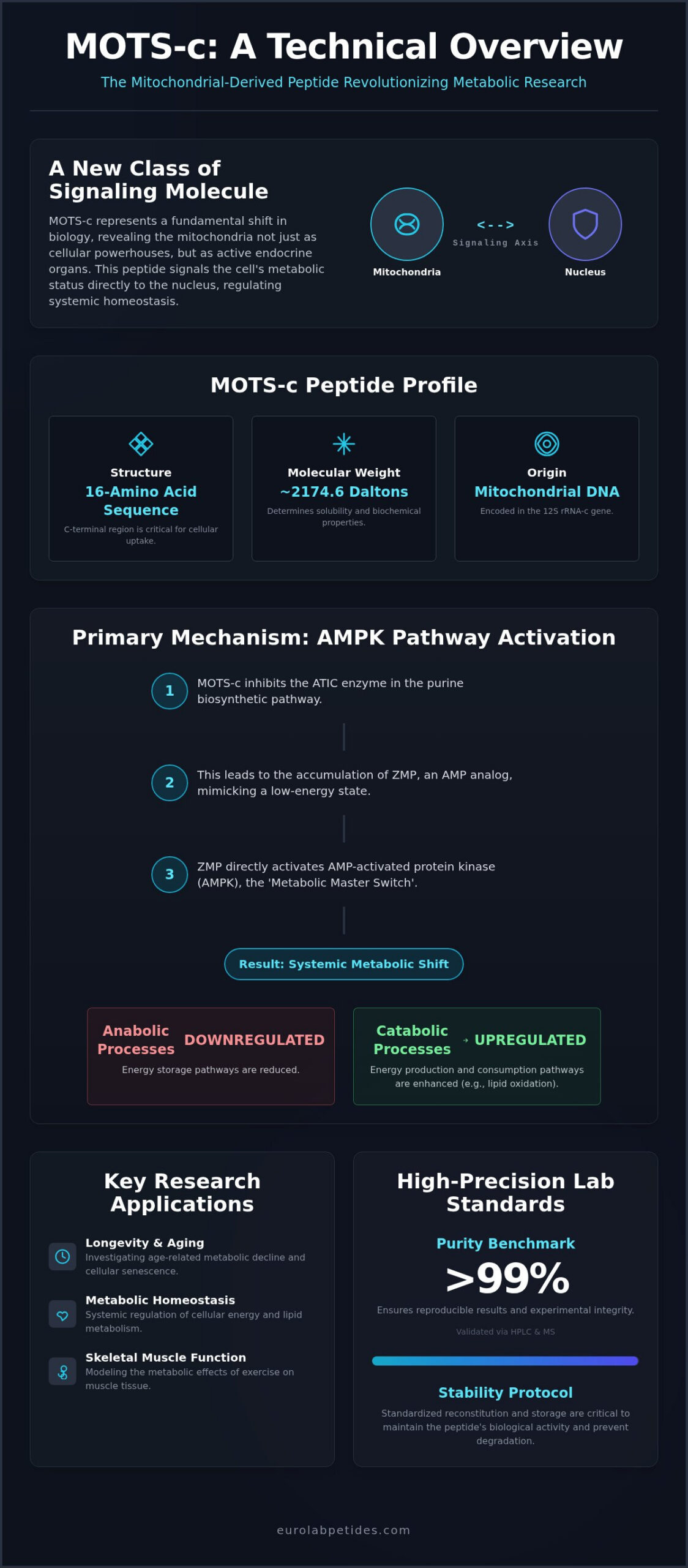
The MOTS-c peptide is a bioactive 16-amino acid sequence that represents a significant departure from traditional nuclear-encoded hormones. While the majority of cellular signaling molecules are synthesized from the nuclear genome, MOTS-c originates within the mitochondrial DNA, specifically from the Mitochondrial Open Reading Frame of the 12S rRNA-c. MOTS-c is a regulator of metabolic homeostasis via the mitochondrial-to-nuclear signaling axis. In laboratory settings, it functions as a mitochondrial-derived signaling molecule that communicates the metabolic status of the organelle to the nucleus, allowing for adaptive responses to cellular stress. This unique genetic origin places it at the center of modern longevity and vitality research.
The Unique Origin of Mitochondrial-Derived Peptides (MDPs)
MOTS-c is categorized within the expanding family of mitochondrial-derived peptides (MDPs), a group that includes other critical signaling molecules like humanin. This classification highlights the evolutionary significance of mitochondrial-encoded signaling, where the organelle functions as a regulatory hub rather than a simple energy producer. Endogenous MOTS-c is produced naturally within mammalian cells; however, research institutions rely on synthetic analogs to study these pathways with precision. The MOTS-c mitochondrial peptide used in laboratory models must mirror the precise amino acid sequence found in vivo to ensure biological activity remains consistent across experimental designs. These synthetic analogs are essential for isolating the peptide’s systemic effects from local mitochondrial activity.
Structural Characteristics and Biochemical Properties
The primary structure of MOTS-c consists of a specific 16-amino acid sequence with a molecular weight of approximately 2174.6 Daltons. This arrangement dictates its biochemical properties and solubility profiles in various laboratory buffers. While it’s generally soluble in aqueous solutions like phosphate-buffered saline (PBS), its stability is highly dependent on concentration and temperature. Research indicates that the C-terminal region of the peptide is particularly critical for cellular uptake and subsequent translocation. Without this structural integrity, the peptide’s ability to cross cellular membranes and interact with nuclear targets is significantly compromised.
Achieving reproducible results in longevity and weight management research requires high-purity materials. Synthesis of this 16-amino acid chain is conducted under rigorous quality control to prevent truncated sequences or byproduct contamination. EuroLab Peptides provides research-grade MOTS-c with multi-level quality control, including in-house and third-party laboratory testing. Every batch is verified against 2026 purity benchmarks to ensure it exceeds the >99% purity standard required for advanced metabolic studies. This level of analytical rigor ensures that the structural characteristics of the synthetic peptide remain identical to the endogenous MDP found in biological systems.
Mechanisms of Action: AMPK Activation and Metabolic Pathway Modulation
The physiological efficacy of the MOTS-c peptide is primarily driven by its capacity to modulate intracellular energy sensors. Its central mechanism involves the robust activation of the AMP-activated protein kinase (AMPK) pathway. This enzyme acts as a metabolic master switch, responding to fluctuations in cellular energy status. By increasing the phosphorylation of AMPK, the peptide facilitates a systemic shift from anabolic to catabolic processes. This transition is essential for maintaining metabolic homeostasis in aging models where mitochondrial efficiency typically declines.
AMPK Signaling and Energy Homeostasis
In vitro studies demonstrate that MOTS-c mimics the metabolic effects of exercise by increasing the intracellular concentration of 5-aminoimidazole-4-carboxamide ribonucleotide (ZMP). This occurs through the inhibition of AICAR transformylase (ATIC), a key enzyme in the purine biosynthetic pathway. As ZMP accumulates, it serves as an AMP analog, directly activating AMPK without altering the actual ATP levels. This unique signaling mechanism leads to downstream effects on lipid oxidation and fatty acid metabolism, effectively reducing ectopic fat accumulation in research subjects.
The regulation of glucose metabolism is another critical facet of this pathway. MOTS-c promotes GLUT4 translocation to the plasma membrane, which significantly enhances glucose uptake in skeletal muscle models. Current MOTS-c therapeutic applications highlight its potential in addressing insulin resistance through these specific molecular interactions. Synergistic effects with the SIRT1 pathway are also observed in longevity research, where the MOTS-c peptide enhances mitochondrial biogenesis and improves the overall quality of the mitochondrial pool. These interactions suggest a sophisticated level of cross-talk between mitochondrial-derived peptides and nuclear-encoded longevity genes.
Folate Cycle and Purine Biosynthesis
The influence of the peptide extends to the folate cycle and de novo purine biosynthesis. By modulating these pathways, it alters the availability of cellular nucleotide pools, which are vital for DNA repair and cellular proliferation. Specific biochemical markers, such as changes in formyl-tetrahydrofolate levels, indicate a direct interaction with folate-dependent enzymes. These metabolic shifts are particularly relevant to weight management research, as they provide a mechanism for optimizing metabolic flux and energy expenditure.
Researchers looking to integrate these findings into their protocols must utilize high-purity materials to ensure data accuracy. EuroLab Peptides offers the Advanced Metabolic Stack, which positions this peptide as a central tool for investigating systemic regulation. Ensuring that synthesis byproducts don’t interfere with AMPK phosphorylation is a non-negotiable standard in professional chemical analysis.
Applications in Longevity and Skeletal Muscle Research
The application of the MOTS-c peptide in longevity research is centered on its ability to counteract the progressive deterioration of mitochondrial efficiency. As cellular aging progresses, the decline in mitochondrial-derived signaling contributes to systemic metabolic dysfunction and reduced proteostasis. Researchers utilize this 16-amino acid sequence to investigate the restoration of these communication axes, particularly in senescent cell models where endogenous production is significantly diminished. By providing an exogenous source of this mitochondrial-encoded signal, scientists can observe the modulation of age-related metabolic decline in controlled laboratory environments.
Mitigating Mitochondrial Decay in Aging Models
Experimental findings in murine models indicate that the administration of the MOTS-c peptide may influence lifespan through the enhancement of mitochondrial biogenesis and the regulation of fission and fusion dynamics. These processes are essential for maintaining a healthy mitochondrial pool and preventing the accumulation of damaged organelles. Research published regarding MOTS-c regulation of muscle and fat provides a foundation for understanding how this peptide maintains systemic metabolic flexibility. In vitro studies have specifically targeted age-dependent insulin resistance, demonstrating that the peptide can potentially reverse the blunted glucose uptake typically observed in older tissue samples. This restoration of insulin sensitivity is a primary focus for those developing a comprehensive longevity research stack aimed at investigating metabolic preservation.
Skeletal Muscle Adaptation and Myogenesis
Skeletal muscle serves as a primary target for mitochondrial signaling research due to its high metabolic demand and role in systemic glucose disposal. The MOTS-c peptide influences myoblast differentiation and the regulation of muscle-specific transcription factors, such as MyoD and myogenin. These interactions are critical for studying muscle fiber-type transitions and the maintenance of lean mass during age-related atrophy. The peptide’s direct effect on muscle metabolism distinguishes it from growth hormone secretagogues like ipamorelin, which primarily influence muscle tissue through the systemic elevation of IGF-1. While growth hormone secretagogues focus on endocrine-driven growth, MOTS-c research explores the intrinsic metabolic capacity of the muscle fiber itself.
Maintaining the integrity of skeletal muscle proteostasis requires high-precision chemical synthesis to avoid experimental variability. Analytical validation through HPLC and MS ensures that the structural properties of the peptide remain intact for longitudinal studies. EuroLab Peptides facilitates this level of rigor by adhering to 2026 purity benchmarks, ensuring that every batch meets the specialized requirements of institutions focused on recovery, muscle tissue, and inflammation research. This commitment to objective data allows for the reliable investigation of myogenesis without the interference of synthesis byproducts.
Laboratory Protocols: Reconstitution, Stability, and Storage
The structural integrity of the MOTS-c peptide is highly sensitive to environmental factors, necessitating rigorous laboratory protocols to prevent premature degradation. Reconstitution is the most critical phase where the lyophilized powder is transitioned into a liquid state for experimental use. Standardized procedures must be followed to maintain the 16-amino acid sequence’s biological activity. Solvent selection is a primary consideration for researchers. Bacteriostatic water, which contains 0.9% benzyl alcohol, is typically utilized to inhibit microbial growth in research vials intended for multi-day use. Conversely, sterile saline (0.9% NaCl) is often selected for immediate, single-use applications where a physiological pH is prioritized over long-term antimicrobial preservation.
Step-by-Step Reconstitution Methodology
Precision in concentration is achieved by determining the exact volume of diluent required for the target molarity. Researchers are encouraged to utilize a peptide calculator to ensure mathematical accuracy and minimize the waste of high-purity materials. Aseptic technique is mandatory within the laboratory environment; vial stoppers must be sanitized with 70% isopropyl alcohol before needle entry. The diluent should be introduced slowly, allowing the liquid to trickle down the interior glass wall rather than being sprayed directly onto the lyophilized cake. Mechanical shear stress, such as vigorous shaking, is strictly avoided as it can lead to the denaturation of the peptide chain. Gentle swirling is the only recommended method for ensuring the solution is fully homogenized and clear.
Long-term Storage and Aliquot Management
Stability metrics for the MOTS-c peptide indicate that the lyophilized powder maintains maximum shelf life when stored in a desiccated state at temperatures of -20°C or -80°C. Under these deep-freeze conditions, the peptide remains viable for up to 24 months. Once the peptide is reconstituted, the solution must be refrigerated at 2°C to 8°C. Data suggests that reconstituted MOTS-c begins to lose potency after 7 to 10 days of refrigeration. To mitigate this, the solution should be divided into single-use aliquots immediately after reconstitution. These aliquots can be frozen once; however, repeated freeze-thaw cycles are prohibited. Every cycle of temperature fluctuation increases the probability of peptide cleavage and a subsequent loss of experimental validity.
Achieving reproducible results in metabolic research depends entirely on the stability of the chemical tools used. Maintaining these strict storage and handling standards ensures that the analytical data remains consistent across all study cohorts. For institutions requiring consistent batch quality and verified stability, order research-grade MOTS-c from EuroLab Peptides to ensure your laboratory starts with >99% purity benchmarks.
Sourcing Research-Grade MOTS-c: Purity and Analytical Standards
The procurement of research-grade MOTS-c peptide requires a rigorous evaluation of analytical data to ensure experimental reproducibility. High-performance liquid chromatography (HPLC) and mass spectrometry (MS) are non-negotiable validation tools in this process. HPLC provides a quantitative measure of purity by separating the target peptide from impurities based on molecular interaction with a stationary phase. MS confirms the molecular weight, ensuring the 16-amino acid sequence is correctly synthesized without truncation. Lower-grade samples frequently contain synthesis byproducts like trifluoroacetic acid (TFA) or residual solvents. These contaminants don’t just affect purity; they can actively interfere with AMPK signaling assays and skew metabolic data. EuroLab Peptides’ commitment to third-party tested, high-purity research materials addresses these concerns by providing verifiable metrics for every batch produced.
Interpreting Certificates of Analysis (CoA)
A Certificate of Analysis (CoA) serves as the primary document of validation for any research batch. Researchers must examine the HPLC chromatogram for a single, sharp peak representing the MOTS-c peptide, with minimal baseline noise. The significance of a >99% purity benchmark cannot be overstated. Even a 2% variance in purity can introduce enough contaminants to alter cellular nucleotide pools or mitochondrial biogenesis markers. It’s essential to verify batch-to-batch consistency for longitudinal studies where metabolic flux must be measured accurately over several months. Radical transparency in providing these documents ensures that every research institution has the empirical evidence needed for high-stakes precision and accountability.
Sourcing Logistics for European Laboratories
Regional regulatory compliance and localized logistics are critical for maintaining the chemical stability of sensitive peptides during transit. European research institutions benefit from localized distribution, which reduces the duration of transit and the risk of temperature excursions. Cold-chain requirements are strictly maintained, as the lyophilized powder is susceptible to degradation if exposed to ambient heat for extended periods. EuroLab Peptides acts as a dedicated partner for certified research peptides, ensuring that all materials are synthesized and stored under European manufacturing standards. This logistical reliability is a shorthand for quality in a global market often fraught with concerns regarding batch integrity. By utilizing multi-level quality control, the brand provides the elite tools required for serious professional inquiry into mitochondrial-derived metabolic regulation.
Advancing Metabolic Research through Mitochondrial Signaling
The technical analysis of the MOTS-c peptide underscores its function as a critical mediator of cellular energy homeostasis and skeletal muscle proteostasis. By activating the AMPK pathway and modulating the folate cycle, this 16-amino acid sequence provides a unique framework for investigating age-related metabolic decline and insulin sensitivity. Success in these high-stakes research environments depends on the strict adherence to reconstitution protocols and the use of materials that meet verified 2026 purity benchmarks. Analytical validation is not merely a preference; it’s a fundamental requirement for experimental integrity.
EuroLab Peptides supports these rigorous demands by providing third-party laboratory tested compounds with >99% purity. These materials are strictly for in-vitro research use and are distributed via secure European-based shipping to ensure batch stability and logistical reliability. Establishing a reliable foundation with verified analytical data is the first step toward achieving reproducible results in metabolic and longevity studies. The continued exploration of mitochondrial-derived peptides promises to redefine our understanding of systemic regulation and cellular longevity.
View MOTS-c Analytical Specifications and Purchase for Research
Frequently Asked Questions
What is the primary difference between MOTS-c and Humanin?
MOTS-c is a 16-amino acid peptide derived from the 12S rRNA gene, whereas Humanin consists of 24 amino acids from the 16S rRNA gene. While both are mitochondrial-derived peptides, the MOTS-c peptide focuses on systemic metabolic regulation via the AMPK pathway. Humanin is primarily investigated for its neuroprotective and anti-apoptotic properties. This distinction is critical for researchers selecting models for metabolic signaling versus those focused on cytoprotection.
Is MOTS-c stable at room temperature during shipping?
Lyophilized MOTS-c exhibits sufficient stability for room-temperature shipping over short durations, typically not exceeding 14 days. To maintain the >99% purity benchmark, European-based logistics are utilized to minimize transit times and prevent environmental degradation. Upon arrival at the laboratory, the compound must be transferred immediately to -20°C or -80°C for long-term storage. Reconstituted solutions aren’t stable at room temperature and require constant refrigeration to maintain integrity.
Which solvents are recommended for MOTS-c reconstitution in metabolic studies?
Bacteriostatic water is the primary solvent recommended for reconstituting the MOTS-c peptide in longitudinal research. The 0.9% benzyl alcohol content serves as a necessary antimicrobial agent for multi-use vials. In sensitive in-vitro metabolic assays where alcohol might interfere with cellular respiration, sterile saline is a suitable alternative. Researchers should select the diluent based on the specific requirements of their experimental model and the intended duration of the study.
Does MOTS-c interact with the nuclear genome?
MOTS-c interacts directly with the nuclear genome through a process called retrograde signaling. Under conditions of metabolic stress, the peptide translocates from the mitochondria to the nucleus. Once inside, it binds to specific promoter regions to regulate the expression of genes involved in the integrated stress response. This mitochondrial-to-nuclear communication is a central focus for researchers studying adaptive metabolic homeostasis and the molecular mechanisms of cellular longevity.
What is the typical concentration used in in-vitro skeletal muscle research?
In-vitro skeletal muscle research typically utilizes concentrations ranging from 0.5 µM to 10 µM. These levels are chosen to elicit measurable changes in GLUT4 translocation and glucose uptake without inducing cytotoxic effects. Precise concentration depends on the specific cell line, such as C2C12 myotubes. Researchers often conduct a preliminary dose-response assay to determine the optimal molarity for their particular metabolic flux analysis and experimental objectives.
How does MOTS-c influence the AMPK pathway differently than Metformin?
MOTS-c activates AMPK through the accumulation of ZMP, which is an intermediate of the de novo purine synthesis pathway. This mechanism mimics the action of AICAR without significantly altering cellular ATP levels. Metformin activates AMPK indirectly by inhibiting mitochondrial Complex I, which increases the AMP:ATP ratio. The peptide offers a more direct signaling route that bypasses the systemic respiratory chain inhibition typically associated with biguanide pharmaceuticals in research models.
What is the current legal status of MOTS-c for research in Europe?
MOTS-c is classified as a research chemical and is legally available for laboratory use across Europe. It’s not approved by the EMA or other regional authorities for human consumption, pharmaceuticals, or medicines. Institutions must ensure compliance with local regulations regarding the handling and disposal of synthetic peptides. All procurement should be documented for in-vitro or animal research purposes only to maintain absolute regulatory and moral consistency.
Can MOTS-c be used in multi-peptide research stacks?
MOTS-c is a cornerstone of the Advanced Metabolic Stack and is frequently utilized in multi-peptide research designs. It’s often paired with compounds that target complementary pathways, such as growth hormone secretagogues or NAD+ precursors. These combinations allow scientists to investigate synergistic effects on mitochondrial biogenesis and tissue repair. Using high-purity materials ensures that interactions observed in the stack are due to the peptides themselves rather than contaminants or byproducts.
