

The integrity of an entire immunological study often rests on a single metric: the verifiable purity of the amino acid sequence used to trigger cellular response. You understand that in-vitro research requires absolute precision, yet sourcing peptides for immune system research frequently involves navigating a market saturated with inconsistent data and non-European suppliers whose quality standards remain opaque. Inconsistent peptide stability and vague sourcing protocols shouldn’t compromise your experimental outcomes. This technical overview provides a rigorous analysis of immune-modulating peptides, their specific laboratory mechanisms, and the 2026 benchmarks required for high-precision experimental results.
We’ll examine the biochemical pathways of thymic peptides and establish a standardized sourcing protocol based on HPLC and mass spectrometry validation. By prioritizing empirical data over anecdotal claims, researchers can ensure their laboratory development remains consistent with the latest cGMP-aligned standards and recent regulatory shifts. This analysis serves as a roadmap for identifying correct peptides for specific immune pathway studies while maintaining the rigorous quality control necessary for reproducible science.
Key Takeaways
- Synthetic sequences have replaced crude thymic extracts to provide the high-purity signaling control required for modern immunobiology research.
- Specific biochemical profiles of peptides like Thymosin Alpha-1 and KPV allow for the clear differentiation of stimulatory and regulatory experimental models.
- Identifying the correct peptides for immune system research involves analyzing their distinct mechanisms within cytokine regulation and cellular migration frameworks.
- Lyophilized peptide integrity is maintained through the application of standardized reconstitution protocols designed to prevent degradation during in-vitro assays.
- High-precision research demands the verification of chemical purity via independent third-party HPLC and Mass Spectrometry analysis.
The Role of Synthetic Peptides in Modern Immunobiology Research
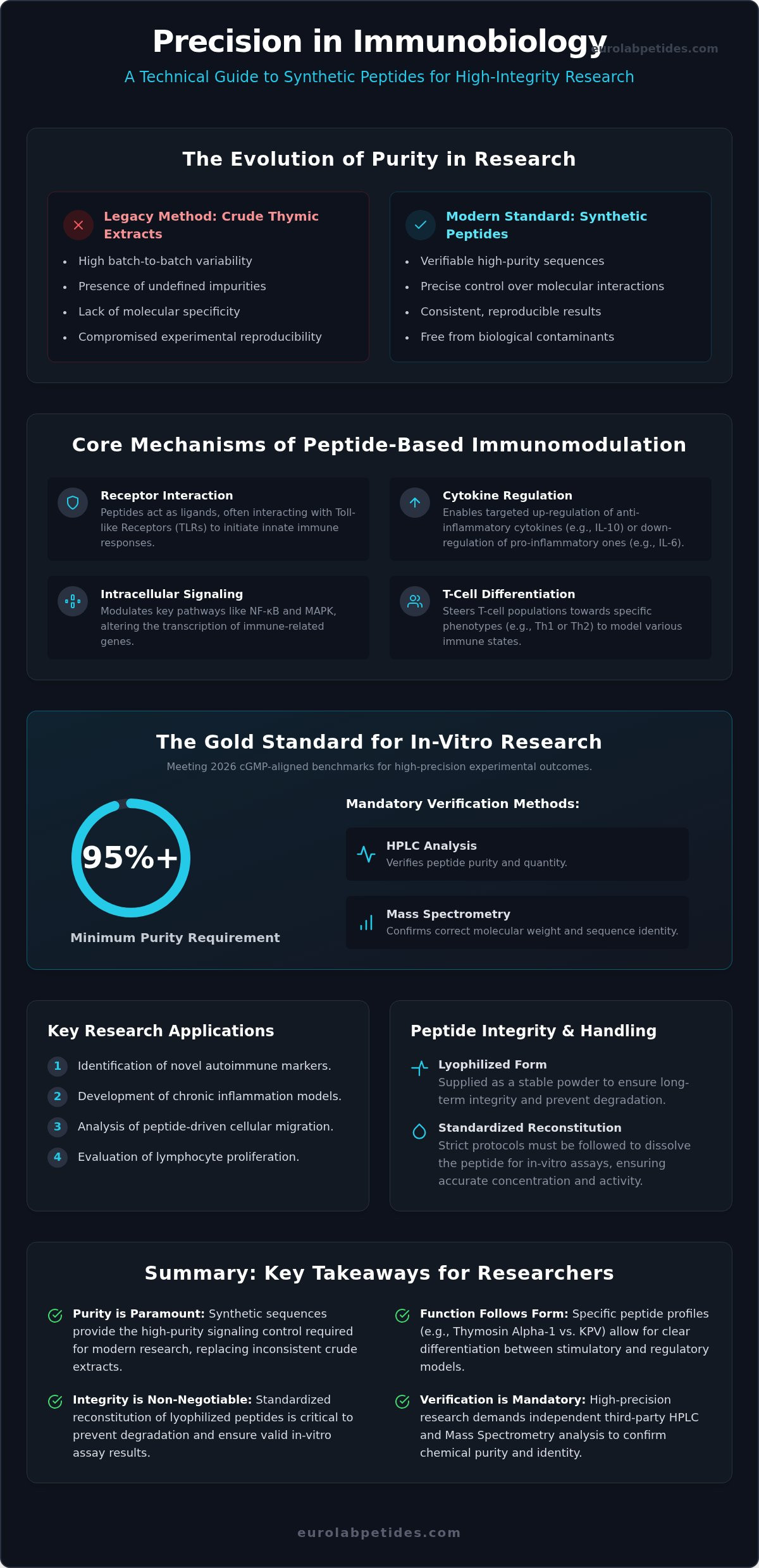
Synthetic peptides have emerged as indispensable biochemical tools for probing complex immune signaling pathways. Historically, researchers relied on natural thymic extracts, but these often presented issues with batch-to-batch variability and undefined impurities. The transition to high-purity synthetic sequences allows for exact control over molecular interaction. The Role of Synthetic Peptides in Modern Immunobiology Research is defined by this shift toward molecular specificity. In-vitro models utilize these sequences to modulate cytokine pathways, providing a controlled environment to observe cellular behavior without the confounding variables found in vivo. It’s essential that these tools remain free from biological contaminants to ensure experimental reproducibility.
Peptides as Modulators of Cellular Signaling
Peptide-based immunomodulation is the targeted alteration of immune responses through specific amino acid sequences. In laboratory settings, these molecules often interact with Toll-like receptors (TLRs), which serve as critical pattern recognition receptors. This interaction is essential for studying the initiation of the innate immune response and the subsequent activation of intracellular cascades. Additionally, researchers observe the influence of these peptides on T-cell differentiation and maturation in-vitro. By adjusting the concentration and sequence of peptides for immune system research, investigators can steer T-cell populations toward specific phenotypes, such as Th1 or Th2, to model various disease states. This level of control isn’t possible with less refined biological agents.
Research Objectives in Immunological Studies
Modern research objectives frequently center on the regulation of pro-inflammatory versus anti-inflammatory cytokines. Synthetic peptides are employed to investigate how specific signals can downregulate Interleukin-6 (IL-6) or upregulate Interleukin-10 (IL-10) in isolated cell cultures. Modeling the response of dendritic cells to synthetic peptide exposure is another critical area of inquiry. These antigen-presenting cells are sensitive to peptide stimuli, making them ideal subjects for studying the bridge between innate and adaptive immunity. High-precision research also focuses on the following areas:
- Identification of novel autoimmune markers in simulated environments.
- Development of chronic inflammation models using macrophage activation.
- Analysis of peptide-driven cellular migration and wound healing models.
- Evaluation of lymphocyte proliferation in response to thymic peptide analogues.
Maintaining sequence homology is a non-negotiable standard in cross-species research to ensure that data derived from murine models remains relevant when compared to human cellular responses. The scope of current research extends from basic signaling discovery to the creation of complex models for chronic pathological states. High-purity chemicals are required to ensure that the observed effects result from the peptide sequence itself rather than contaminating endotoxins. Laboratory standards in 2026 dictate that a minimum purity of 95% is maintained for all in-vitro signaling studies to uphold the integrity of the data.
Mechanisms of Action: Investigating Thymic Peptides and Cytokine Regulation
Thymic peptides serve as primary ligands in the orchestration of cellular defense mechanisms. Within controlled research environments, these molecules modulate intracellular signaling cascades, specifically the Nuclear Factor-kappa B (NF-κB) and Mitogen-Activated Protein Kinase (MAPK) pathways. By interacting with these regulatory hubs, peptide-based immunomodulating agents alter the transcription of genes responsible for cytokine production. These sequences also influence the expression of Major Histocompatibility Complex (MHC) Class I molecules, which refines the parameters of antigen presentation in laboratory models. High-stakes investigations into peptides for immune system research depend on this molecular specificity to produce reproducible data. The precision of these interactions allows for the mapping of complex immune responses without the interference of biological contaminants often found in crude extracts.
Thymosin Alpha-1: A Profile for In-Vitro Analysis
Thymosin Alpha-1 (TA-1) is a highly acidic polypeptide consisting of 28 amino acid residues. Its biochemical profile is defined by its capacity to enhance the maturation of T-lymphocytes in-vitro. Researchers frequently utilize TA-1 in viral replication models and oncology studies to observe its stimulation of Natural Killer (NK) cell activity. These investigations rely on analytical-grade reagents to ensure that the observed upregulation of interferon-gamma is a direct result of the peptide’s interaction with Toll-like receptor 9 (TLR9). The molecular structure of TA-1 ensures high binding affinity, making it a staple in studies focusing on the restoration of immune homeostasis in compromised cellular environments. Standardized protocols for utilizing peptides for immune system research require a deep understanding of these molecular mechanisms to avoid erroneous data interpretation.
Thymosin Beta-4 and Tissue Repair Research
Thymosin Beta-4 (TB-4) is recognized for its potent actin-sequestering properties, which are fundamental to cellular mechanics and motility. In wound healing simulations, TB-4 promotes angiogenesis by stimulating the migration of endothelial cells through the G-actin binding domain. It’s critical to distinguish between the full 43-amino acid TB-4 sequence and the TB-500 fragment in research. While the full-length peptide provides a comprehensive view of cellular remodeling, the TB-500 fragment is often isolated to study targeted signaling pathways in tissue repair and recovery research. This distinction is vital for experimental accuracy, as the fragment’s molecular weight and solubility profile differ significantly from the parent molecule. High-purity synthesis of these sequences is essential to maintain the integrity of cellular migration assays.
Comparative Analysis: Immunomodulatory vs. Anti-Inflammatory Peptide Models
Investigators categorize synthetic sequences by their primary experimental utility to ensure the integrity of in-vitro signaling models. Stimulatory models, such as Thymosin Alpha-1, are utilized to observe the enhancement of effector cell activity and T-cell maturation. Conversely, regulatory models focus on the suppression of aberrant signaling and the restoration of homeostasis. These immunomodulatory strategies are essential for simulating the nuanced balance of the immune system within a laboratory setting. High-purity peptides for immune system research allow for the precise mapping of these divergent pathways without the interference of biological impurities often found in non-synthetic reagents.
KPV and the Modulation of Inflammatory Responses
The tripeptide Lysine-Proline-Valine (KPV) is a derived sequence of alpha-melanocyte-stimulating hormone that lacks the pigmentary effects of its parent molecule. In-vitro, KPV interacts predominantly with melanocortin receptors, specifically MC1R, to inhibit the translocation of NF-κB into the nucleus. This mechanism makes it a superior tool for studying the downregulation of pro-inflammatory cytokines such as TNF-α and IL-1β. When compared to traditional anti-inflammatory research agents like glucocorticoids, KPV offers a targeted molecular approach that minimizes off-target cellular toxicity in sensitive cell lines. Its small molecular weight facilitates rapid diffusion in culture media, which is critical for time-course assays in peptides for immune system research.
BPC-157 in Immune-Related Inflammation Studies
While frequently associated with angiogenesis and tissue repair, the pentadecapeptide BPC-157 demonstrates significant utility in modulating cytokine storms within isolated cell cultures. For a comprehensive molecular breakdown, researchers should consult the BPC-157: A Technical Guide. In research models, BPC-157 is used to investigate the interplay between the gut-immune axis, specifically focusing on the stabilization of the intestinal mucosal barrier and the subsequent reduction of systemic inflammatory markers. Its role extends to the stabilization of mast cells and the modulation of nitric oxide synthesis in stimulated macrophage populations. These properties allow investigators to model complex inflammatory responses that involve multiple cellular lineages simultaneously.
Laboratory development often involves the analysis of synergistic peptide “stacks” to simulate the multi-layered nature of biological signaling. Combining a stimulatory peptide with a regulatory sequence allows investigators to observe the competitive binding and signaling crosstalk that occurs in complex environments. Such stacks require high-stakes precision in chemical synthesis to ensure that the cumulative purity remains within the 95-98% threshold necessary for verifiable results. By utilizing these multi-peptide models, researchers can move beyond single-pathway analysis to a more holistic understanding of immunomodulation.
Laboratory Standards for Handling and Reconstituting Immune-Focused Peptides
Lyophilization remains the definitive method for ensuring the long-term stability of peptides for immune system research. This process of freeze-drying removes moisture via sublimation, which effectively arrests proteolytic degradation and maintains the structural integrity of the amino acid chain. In-vitro assays demand high-purity reagents; any compromise in the lyophilization process can lead to the presence of residual moisture, which catalyzes hydrolysis and renders the peptide sequence inactive. Standardized laboratory protocols must be strictly followed to ensure that the biochemical properties observed during experimentation are a result of the peptide’s intended sequence rather than degradation products or biological contaminants.
Reconstitution and Solvent Selection
Reconstitution requires precise solvent selection based on the specific requirements of the cellular assay. Bacteriostatic water, containing 0.9% benzyl alcohol, is frequently utilized to inhibit bacterial growth in multi-use laboratory vials. Sterile saline serves as an alternative for sensitive assays where alcohol might interfere with cell viability or receptor binding. Concentration levels are typically calculated to reach 1 mg/mL or 5 mg/mL to facilitate accurate micro-pipetting and consistent dosing across experimental groups. It’s imperative to avoid vigorous agitation during the reconstitution process to prevent irreversible peptide denaturation. Instead, a gentle swirled rotation of the vial is recommended until the lyophilized cake is completely dissolved into the aqueous solution.
Stability and Storage Logistics
The stability of these compounds is highly dependent on thermal management and the prevention of molecular degradation. Lyophilized powders should be stored at -20°C for short-term use, while long-term preservation requires -80°C to minimize molecular kinetic energy and potential oxidation. Once reconstituted, peptides in aqueous solution possess a significantly reduced half-life, often requiring use within a window of several days to weeks depending on the specific sequence and buffer conditions. Repeated freeze-thaw cycles must be avoided, as the resulting ice crystal formation can shear the peptide chains and compromise the molecular weight. For detailed procurement and validation standards, investigators should review How to Buy Research Peptides. Maintaining aseptic technique throughout this process is non-negotiable to prevent endotoxin contamination, which would otherwise skew immunological data and invalidate the study’s results.
Ensuring experimental consistency requires a meticulous approach to chemical preparation. To maintain the highest levels of analytical precision in your laboratory development, you should source high-purity chemicals that are backed by verifiable testing data. These standards are essential for researchers who prioritize the reproducibility of their in-vitro signaling models.
Sourcing High-Purity Peptides for Rigorous In-Vitro Investigation
The reliability of immunological data is fundamentally tethered to the chemical purity of the reagents used. When sourcing peptides for immune system research, investigators must prioritize suppliers who provide comprehensive analytical validation for every batch. The presence of truncated sequences or residual trifluoroacetic acid (TFA) can induce off-target cellular responses, effectively invalidating the results of sensitive in-vitro assays. In the 2026 landscape, the distinction between research-grade and pharmaceutical-grade has become more pronounced. While research-grade materials typically require a minimum purity of 95%, those intended for high-precision laboratory development must adhere to rigorous analytical standards to ensure that experimental outcomes are reproducible across different research facilities.
Analytical Purity and Batch Consistency
Interpreting High-Performance Liquid Chromatography (HPLC) chromatograms is a critical skill for the modern researcher. A single, sharp peak with baseline resolution indicates that the peptide is free from significant chemical contaminants. Purity is calculated by the area under the curve (AUC), where a value of 98% or higher is recommended for sensitive signaling studies. However, HPLC alone doesn’t confirm the identity of the molecule. Mass Spectrometry (MS) must be used to verify the molecular mass, ensuring the amino acid sequence was synthesized correctly without errors in the primary structure. Avoiding “grey market” suppliers is essential; these entities often provide unverified Certificates of Analysis (COAs) that lack the raw data necessary for independent verification.
The EuroLab Quality Protocol
EuroLab Peptides implements a multi-level quality control protocol that integrates internal testing with independent third-party laboratory validation. This dual-layer approach ensures that every vial meets the rigorous demands of the specialized scientific community. By maintaining a European-based supply chain, the brand provides logistical reliability and adheres to regional manufacturing standards that prioritize ethical sourcing and chemical transparency. This commitment to objective data removes the ambiguity often found in global chemical procurement. Researchers can access detailed technical specifications and batch-specific analysis by visiting the EuroLab Peptides Homepage. This proof-first methodology respects the intelligence of the user and provides the absolute security required for high-stakes precision research. Utilizing peptides for immune system research from a transparent, European source minimizes the risks associated with inconsistent purity and ensures that laboratory development remains focused on empirical discovery.
Advancing Immunological Precision through Analytical Excellence
The integrity of modern immunobiology relies on the transition from variable biological extracts to high-purity synthetic sequences. You’ve seen how specific molecular mechanisms, such as those found in Thymosin Alpha-1 and BPC-157, allow for the targeted modulation of cytokine pathways in-vitro. Maintaining this precision requires strict adherence to lyophilization standards and the use of independent third-party validation. The deployment of high-purity peptides for immune system research is the non-negotiable cornerstone of reproducible in-vitro modeling.
EuroLab Peptides provides an objective framework for laboratory development by offering HPLC and Mass Spectrometry reports for every batch. Our European-based logistics ensure that research-grade chemicals meet the highest regional quality standards. These products are strictly for in-vitro research and laboratory development; they aren’t intended for human consumption or clinical use. By prioritizing empirical data over anecdotal claims, you can ensure that your signaling studies produce verifiable results. View our catalog of high-purity peptides for immune system research and secure the elite tools necessary for your next phase of discovery. We’re committed to supporting your rigorous pursuit of scientific excellence.
Frequently Asked Questions
What are the most common peptides used in immune system research?
Thymosin Alpha-1, Thymosin Beta-4, and the KPV tripeptide are the primary sequences utilized in modern immunobiology. These synthetic tools allow researchers to probe specific signaling pathways, such as cytokine regulation and T-cell differentiation, in-vitro. Each molecule offers a distinct biochemical profile that facilitates the isolation of cellular responses without the confounding variables found in natural extracts. These peptides for immune system research are essential for establishing reproducible baseline data in laboratory development.
How does Thymosin Alpha-1 influence T-cell maturation in-vitro?
Thymosin Alpha-1 enhances the maturation of T-lymphocytes by interacting with Toll-like receptor 9 (TLR9) in isolated cell cultures. This interaction triggers intracellular signaling cascades that promote the differentiation of precursor T-cells into functional effector cells. Researchers frequently observe an increase in the expression of Major Histocompatibility Complex (MHC) molecules and the upregulation of interferon-gamma. These effects make TA-1 a critical reagent for studying the initiation of adaptive immune responses within controlled environments.
Is Thymosin Beta-4 the same as TB-500 for research purposes?
Thymosin Beta-4 is the full-length 43-amino acid polypeptide, whereas TB-500 is a synthetic fragment containing the active G-actin binding domain. In research settings, the TB-500 fragment is utilized to isolate specific signaling responsible for cellular migration and angiogenesis. While the full-length TB-4 provides a broader view of cellular remodeling, the TB-500 fragment allows for more targeted investigation of actin-sequestering mechanics. Both sequences are indispensable for tissue repair and recovery research models.
Why is third-party testing critical for research-grade peptides?
Independent third-party testing provides objective verification of chemical purity and sequence accuracy. HPLC analysis determines the percentage of the target peptide relative to contaminants, while mass spectrometry confirms the molecular weight matches the intended primary structure. This dual-layer validation ensures that experimental results are reproducible and free from the influence of batch-to-batch variability. Without external validation, researchers risk utilizing reagents that contain truncated sequences or biological endotoxins that skew immunological data.
Can peptides be used to study autoimmune pathways in the lab?
Synthetic peptides are frequently employed to model autoimmune pathways by simulating the loss of immune tolerance in-vitro. Researchers use these molecules to investigate the dysregulation of pro-inflammatory cytokines like IL-6 and the subsequent activation of self-reactive T-cell populations. By introducing specific sequences into isolated cell cultures, investigators can observe the competitive binding at receptor sites. This allows for the mapping of regulatory failures in a highly controlled and verifiable laboratory environment.
What is the recommended storage temperature for lyophilized immune peptides?
Lyophilized powders should be stored at -20°C for short-term use or -80°C for long-term preservation to prevent molecular degradation. These sub-zero temperatures effectively arrest the kinetic energy that leads to oxidation and proteolytic cleavage. Once a peptide is reconstituted into an aqueous solution, it becomes significantly more labile and should be maintained at 2°C to 8°C. Researchers must avoid repeated freeze-thaw cycles, as ice crystal formation can physically shear the peptide chains.
How does KPV peptide modulate the inflammatory response in cellular models?
KPV modulates the inflammatory response by interacting with melanocortin receptors to inhibit the translocation of NF-κB into the nucleus. This tripeptide sequence prevents the transcription of genes responsible for producing pro-inflammatory cytokines like TNF-alpha. In cellular models, KPV is often utilized to evaluate the downregulation of acute inflammatory markers in stimulated macrophage populations. Its small molecular size facilitates rapid diffusion in culture media, making it an efficient tool for high-precision peptides for immune system research.
Are these peptides intended for human clinical use or research only?
All products provided for laboratory development are strictly for in-vitro research purposes and are not intended for human consumption or clinical use. These chemicals are synthesized to meet the rigorous analytical demands of the scientific community and are used to probe biochemical pathways in isolated cell lines. No medical advice is provided, and the sequences should never be utilized as pharmaceuticals. Maintaining this distinction is essential for adhering to regional regulatory compliance and ethical laboratory standards.
